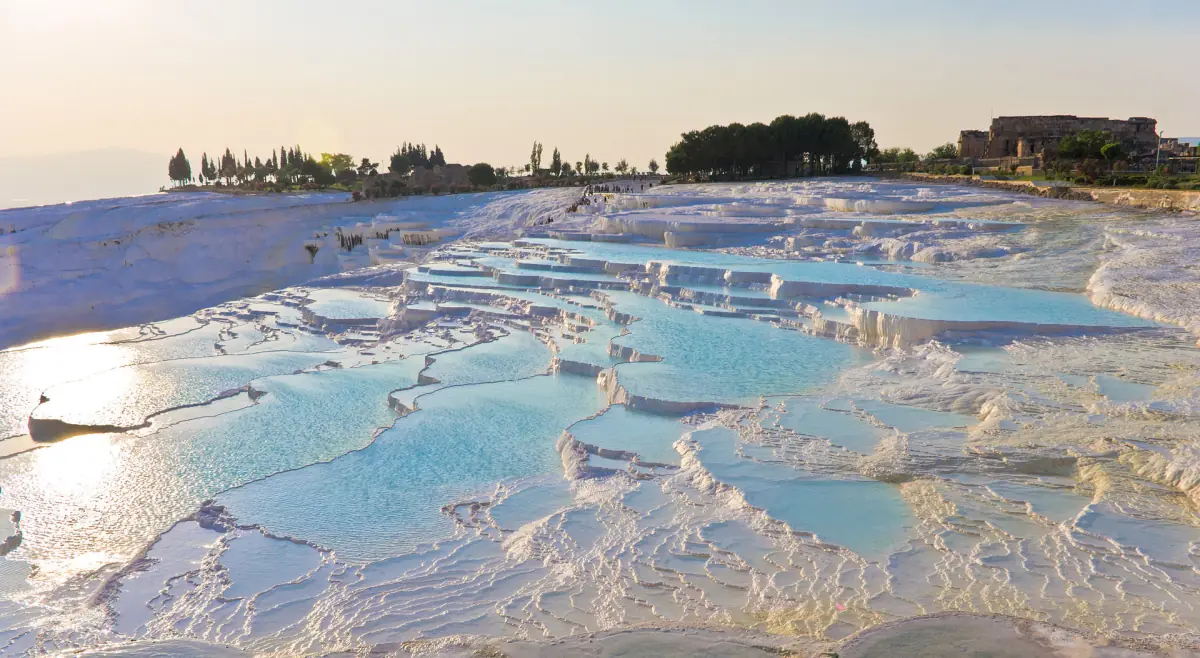
Pamukkale at a glance
Pamukkale means roughly "cotton castle" in Turkish. The name fits the white slope above the plain near Denizli. The terraces and the ancient city of Hierapolis share one hillside, and together they form one World Heritage site, listed in 1988 for both nature and culture. Hierapolis lies about 18 km north of Denizli.
The white is not snow, ice or salt. It is calcium carbonate that warm spring water leaves behind as it flows downhill. If you want to see the terraces and the ruins with a guide, compare the options on our page about Pamukkale tours.
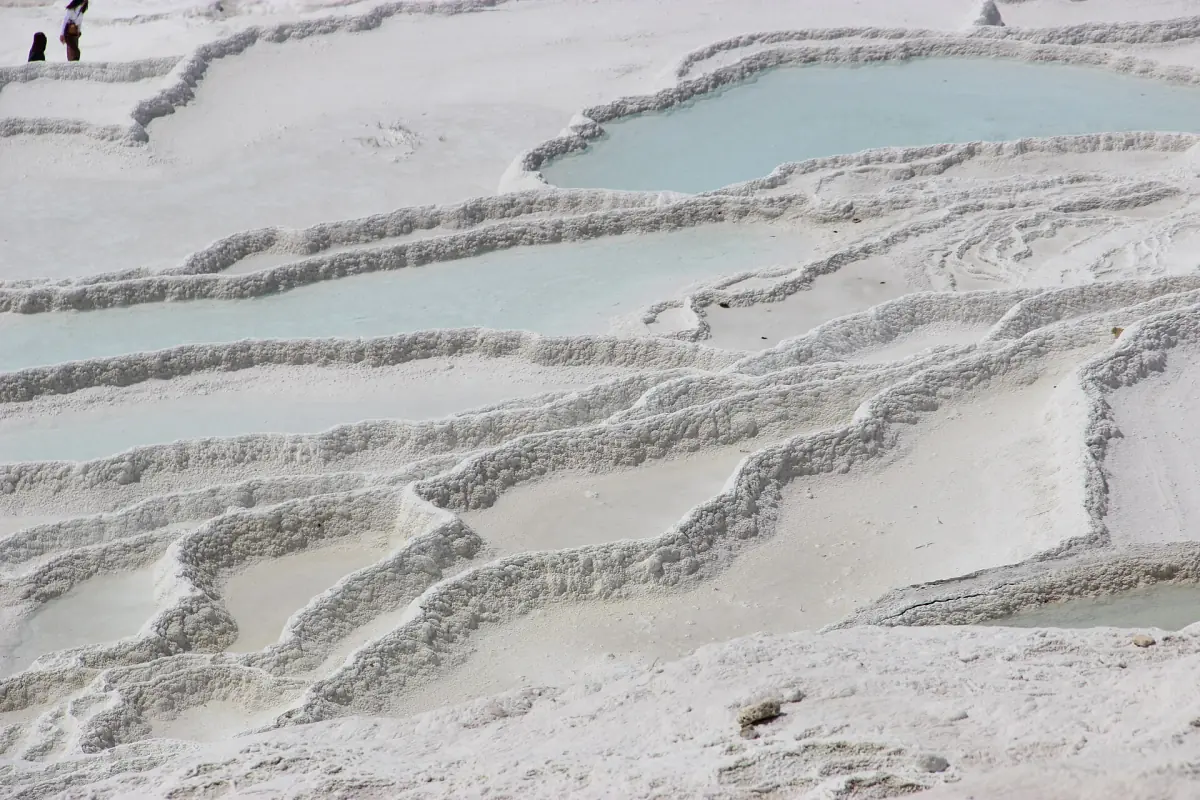
Pamukkale facts in a table
The numbers most visitors ask about.
| Topic | Fact |
|---|---|
| Rock | Travertine, a limestone that forms when mineral water deposits calcium carbonate |
| Spring water at the terraces | 35.6 °C at the spring outlet; shallow visitor pools can differ |
| Karahayıt Red Spring | About 58 °C at the spring, all year |
| Antique Pool | Around 36 °C, deeper than 2 m in places |
| Theatre of Hierapolis | 50 rows of seats |
| Domitian Gate | Built about 84–86 AD |
| Archaeological museum | 3 exhibition rooms, free in 2026 |
| Adult ticket, foreign visitors | €30 in 2026; children up to 8 free with passport or ID |
| Antique Pool swim, foreign adults | TRY 600 in 2026/27, extra to the site ticket |
| Last hotels on the terraces | The last two were demolished in 2001 |
For most visitors, three numbers matter on the day: the ticket price, the barefoot rule on the terraces and the separate swim fee for the Antique Pool. Check the current pool status and the gate times before you go.
Our pick: see how the terraces formed
Our take: a guided day gives you time on the travertines with someone to explain them.
Hand-picked tours, booked through GetYourGuide. Prices are indicative starting prices in euros (as of October 2026). Tap a tour for live availability and the current price in your currency.
Pamukkale tours and day trips
Guided visits, day trips and combinations, with live prices and availability.
How the travertines formed
Water, limestone and carbon dioxide.
Warm water rich in calcium
Thermal water rises through limestone and carries a lot of dissolved calcium hydrogen carbonate. At the surface it meets the air.
Carbon dioxide escapes
As the water flows and cools, it loses carbon dioxide. Calcium carbonate can no longer stay dissolved and settles as a thin layer of solid mineral.
Layer by layer
Over a very long time, these layers build the stepped rims and basins that you see. The process is still active at Pamukkale, so the terraces keep changing.
Why the surface is white
Fresh calcium carbonate is bright white. Water is directed from place to place on a schedule. Some terraces are dried for a time so the deposits harden and algae does not grow, which is why not every basin is full.
Travertines, barefoot rules and water levels →Water, temperature and the red springs
Keep the numbers apart.
Spring or pool
The spring outlet at the terraces is 35.6 °C. That figure does not tell you how warm a shallow pool is by the time the water has flowed down. The Antique Pool is a separate case with its own water.
Cleopatra's Pool (Antique Pool) →The Antique Pool
The pool holds ancient marble columns that lie in the water. Earthquakes and the thermal springs shaped it. The link to Cleopatra is a legend, not a recorded visit.
Karahayıt
About 5 km from Pamukkale, the spring at Karahayıt is around 58 °C and leaves rust-red deposits. The color comes from iron oxide. The village is known for thermal hotels with indoor and outdoor pools.
Karahayıt and the Red Spring →No health claims
This guide describes the water, not its effects. Follow the rules posted at each pool.
Hierapolis and the site in numbers
The ancient city and what changed after 1988.
An old city above the terraces
Hierapolis was founded in the 2nd century BC. After a large earthquake in 60 AD it was rebuilt as a Roman city, and later it became a Christian center. Earthquakes in the 7th century and in the 14th century led to its final abandonment.
History of Pamukkale →Theatre, necropolis and martyrium
The theatre has 50 rows of seats and carved reliefs on the stage building. The necropolis has sarcophagi and tomb houses. The Martyrium of Philip is an octagonal building on the hill.
Hierapolis guide →Hotels and roads removed
Hotels were built on the slope from the 1970s. After a plan from 1992, hotels were removed step by step. The last two hotels were demolished in 2001, the road through the terraces was closed and a water distribution network was built.
Walking rules today
The natural terraces are closed to visitors. You walk on marked paths and designated bathing areas. Take your shoes off where you step on the deposits, and stay on the main paths.
Keep reading
More about the terraces, the ruins and the villages.
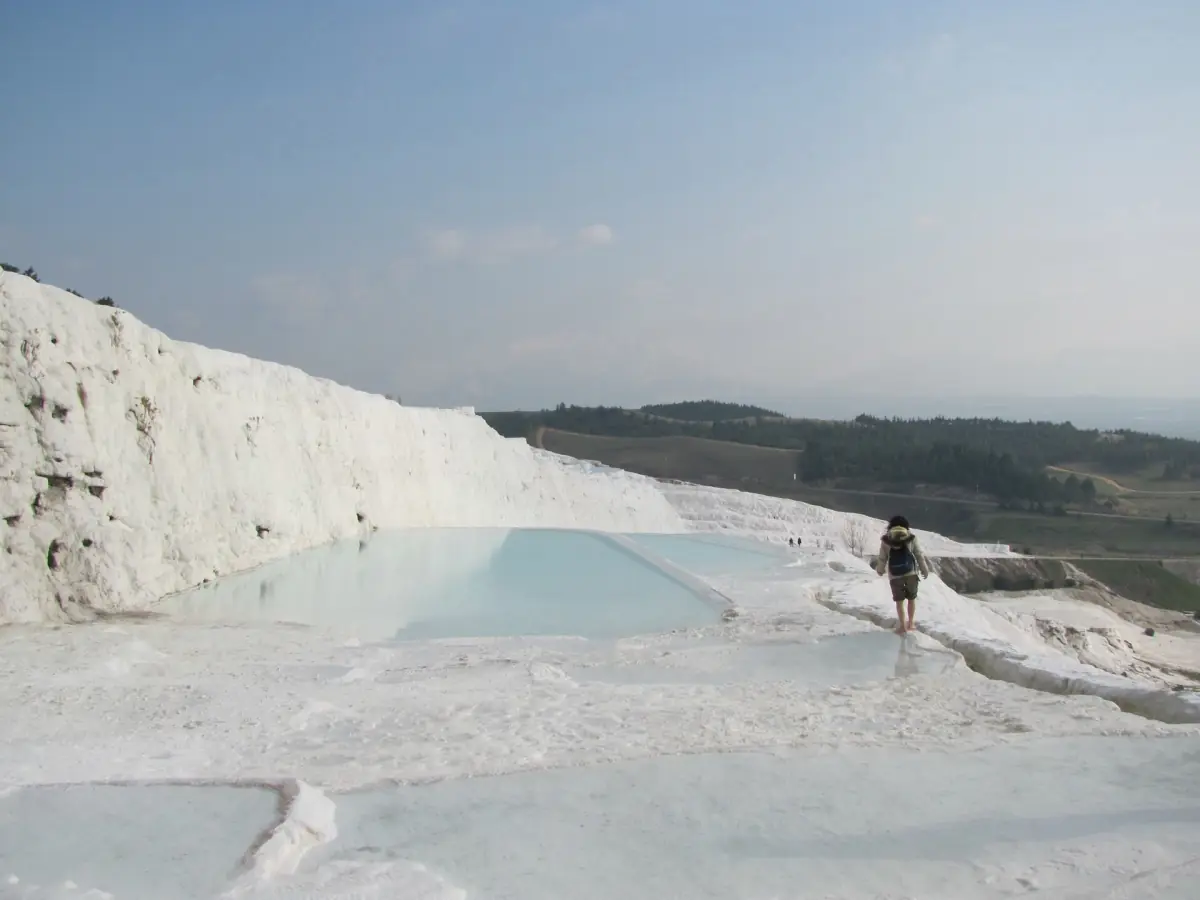
Travertines and barefoot rules
Where you may walk and why pools change.
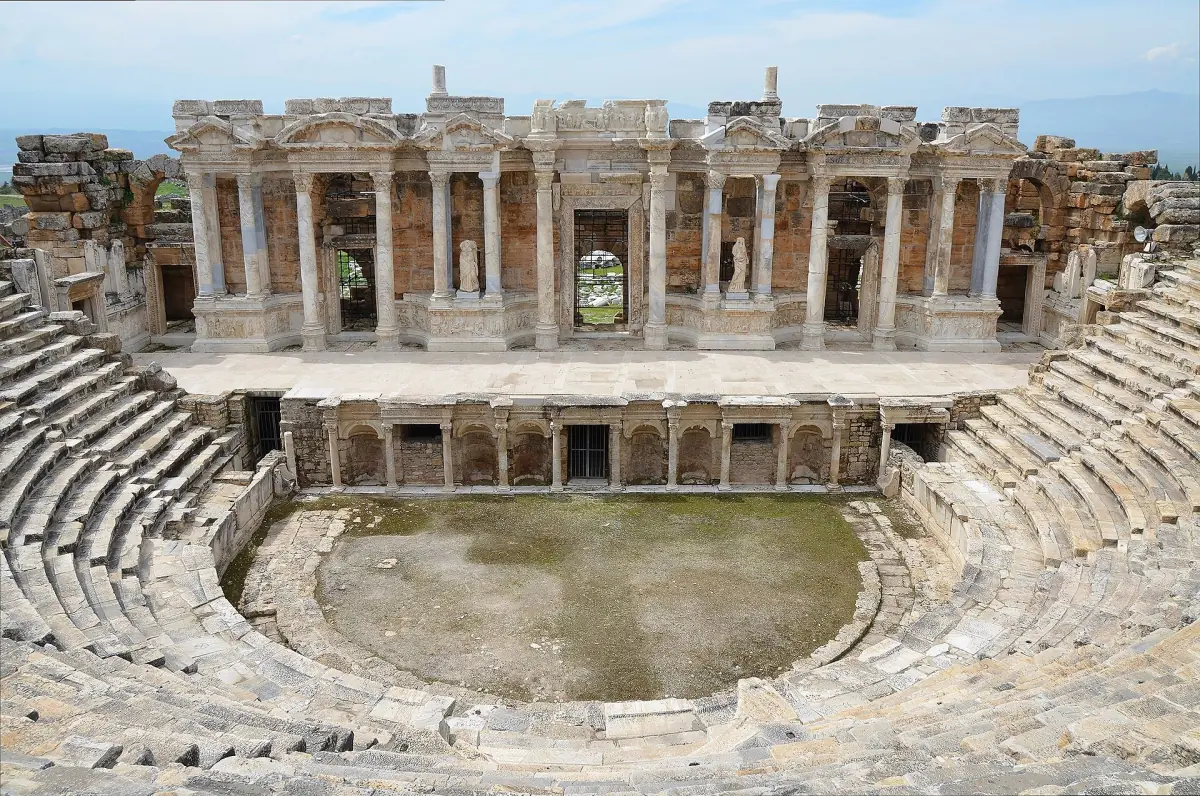
Hierapolis
Theatre, necropolis and martyrium.
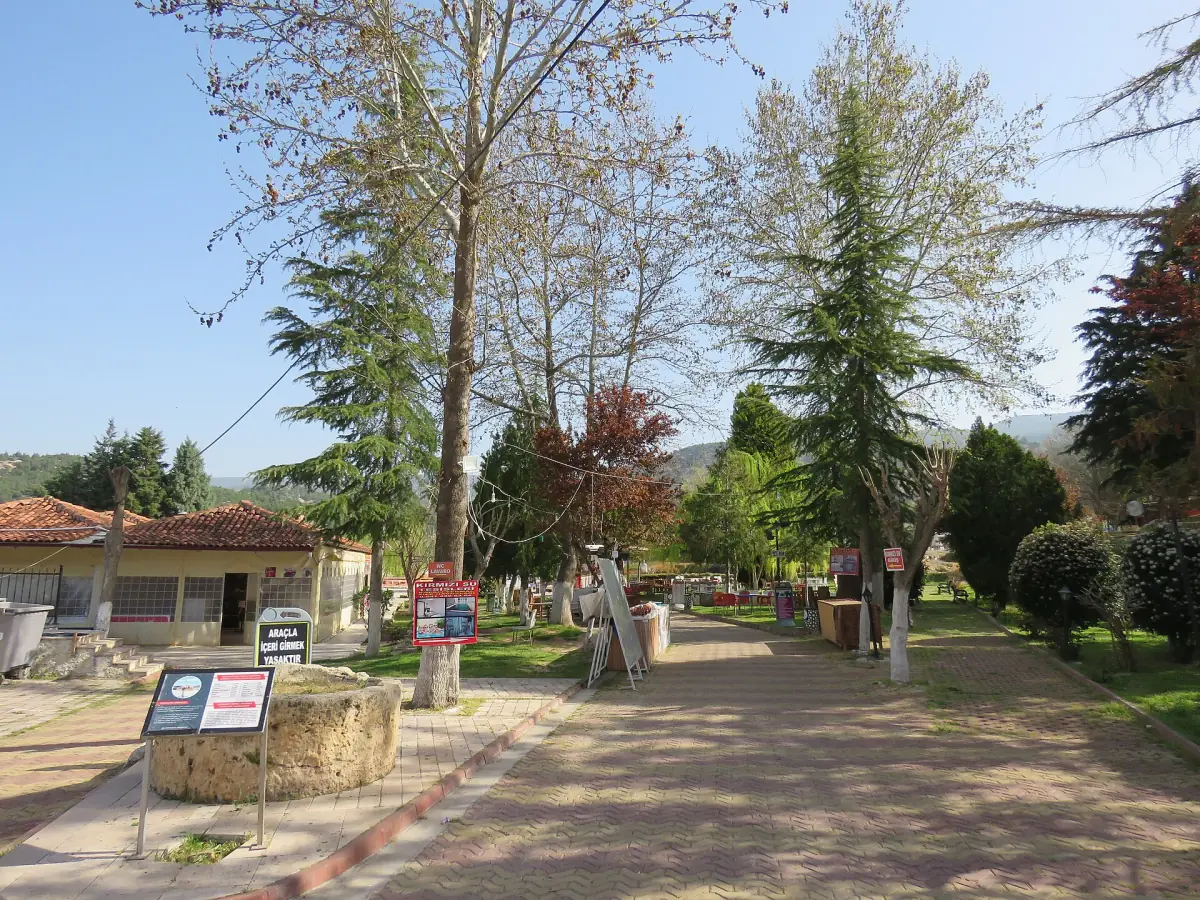
Karahayıt Red Springs
Iron-colored deposits and thermal hotels.
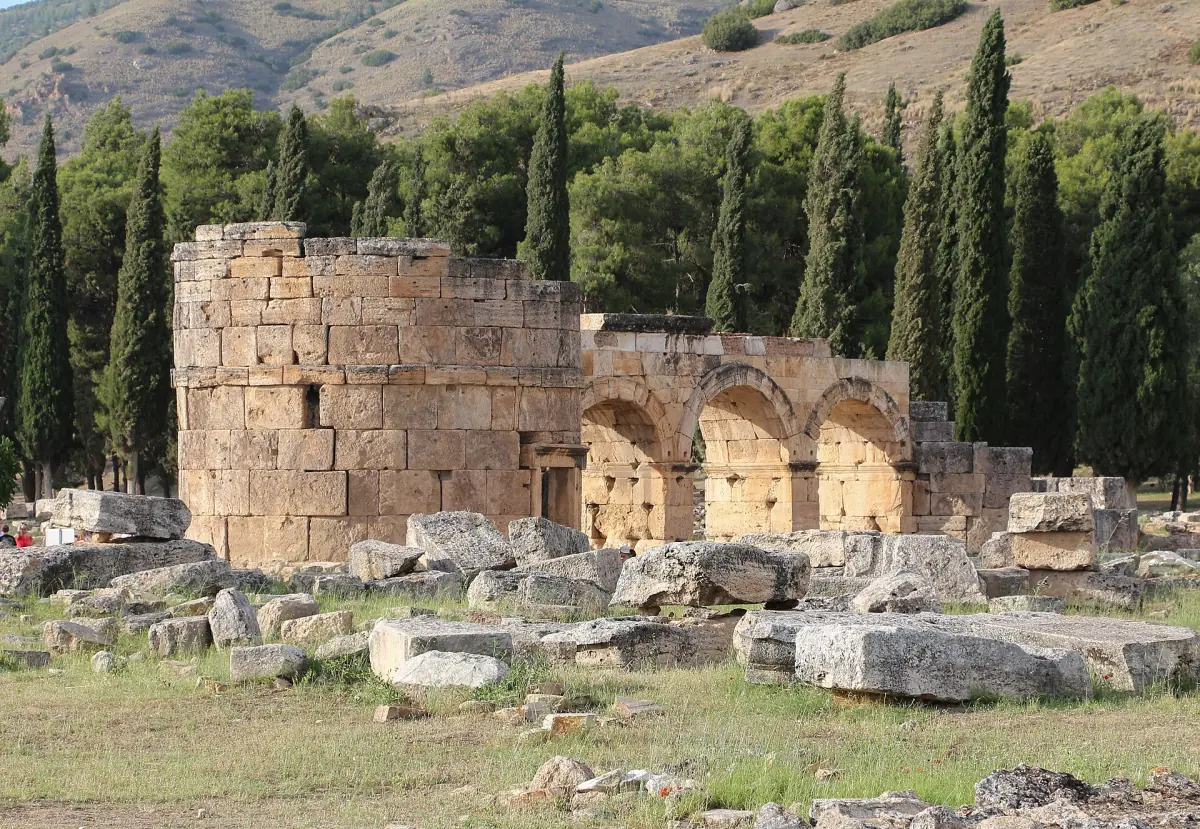
Pamukkale history
From the Roman city to the hotel removal.
For the wider region, see Pamukkale in the Denizli guide. Ancient Laodikeia and Aphrodisias also have their own guide there.
Pamukkale facts: frequently asked questions
Why are the Pamukkale terraces white?
Thermal water rich in calcium hydrogen carbonate loses carbon dioxide as it flows. Calcium carbonate settles on the surface, and fresh deposits are bright white. It is not snow, ice or salt.
Is the water in Pamukkale hot?
The spring outlet at the terraces is 35.6 °C. The Antique Pool is around 36 °C, and the Red Spring in Karahayıt is about 58 °C. The temperature in shallow pools on the slope can differ from the spring.
Is Pamukkale a UNESCO World Heritage site?
Yes. Hierapolis-Pamukkale was listed in 1988 as a mixed site, for its natural travertines and for the ancient city.
What does Pamukkale mean?
It means roughly "cotton castle" in Turkish. Hierapolis is the name of the ancient city on the same hill, and the Antique Pool is the separate pool with ancient columns.
Are the travertines still growing?
Yes, travertine still forms at Pamukkale. How fast it grows at a given spot, and how many springs are active at the same time, depends on the water and cannot be given as one figure.
Is this the official Pamukkale website?
No. This is an independent travel guide. Prices, hours and rules are set by the site operators, so check the current notice at the gate.