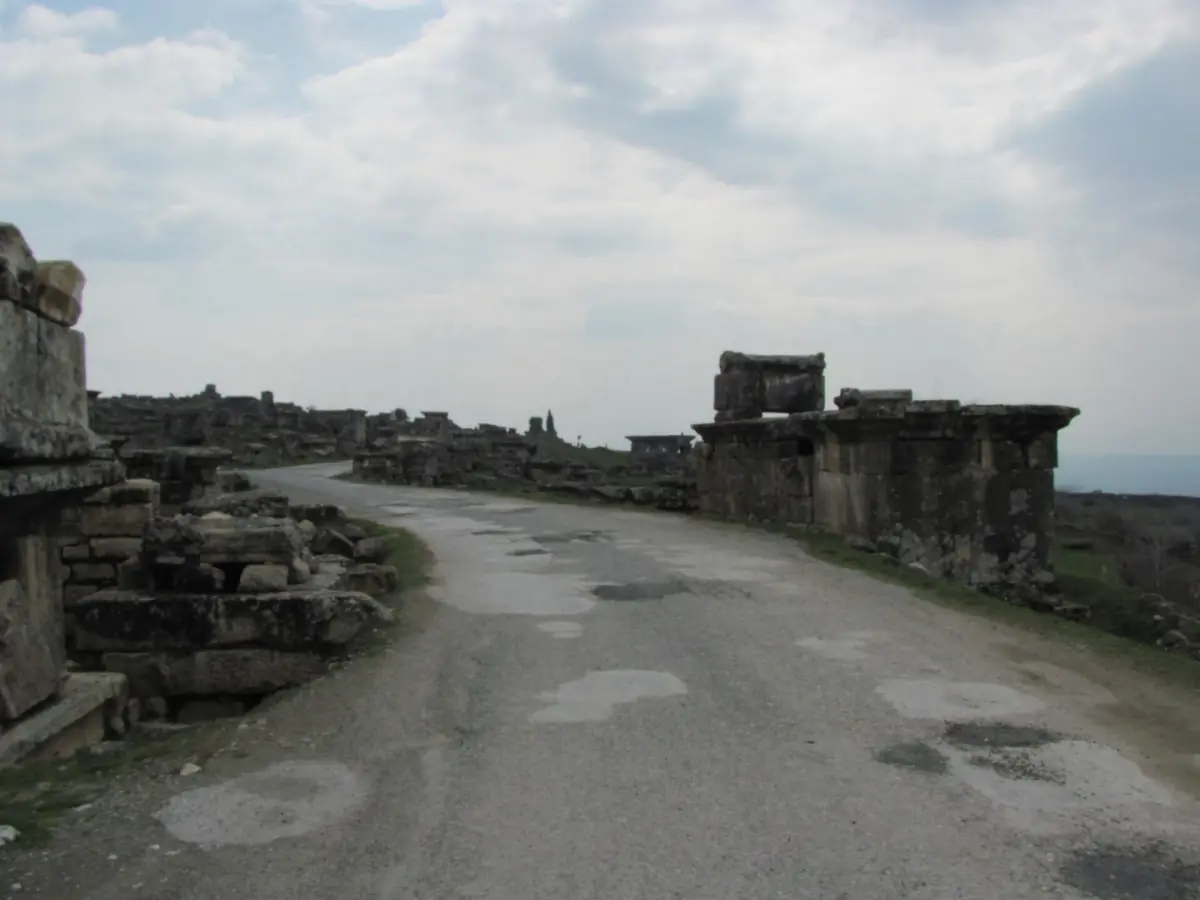
The history of Pamukkale in brief
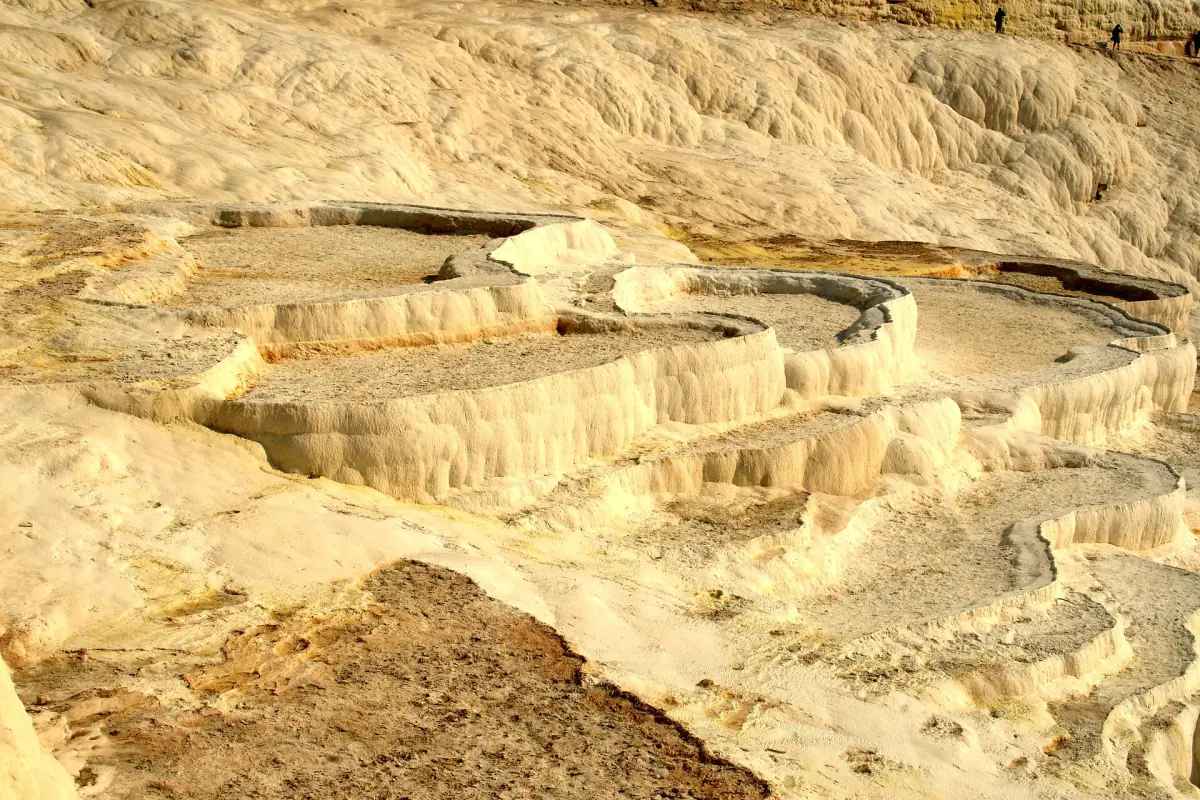
The history of Pamukkale is the history of Hierapolis and of the white terraces below it. The city was founded in the 2nd century BC and is linked to Eumenes II of Pergamon and the Attalid dynasty. After a major earthquake in AD 60 it was rebuilt as a Roman city. Later it became an important Christian centre. Earthquakes in the 7th century caused heavy destruction, and a quake in the 14th century ended life in the city for good.
UNESCO listed Hierapolis-Pamukkale in 1988 as a mixed natural and cultural site. The earthquakes mentioned here are events from the past and not a warning for today. For the layout of the ruins and what to see, go to the Hierapolis guide.
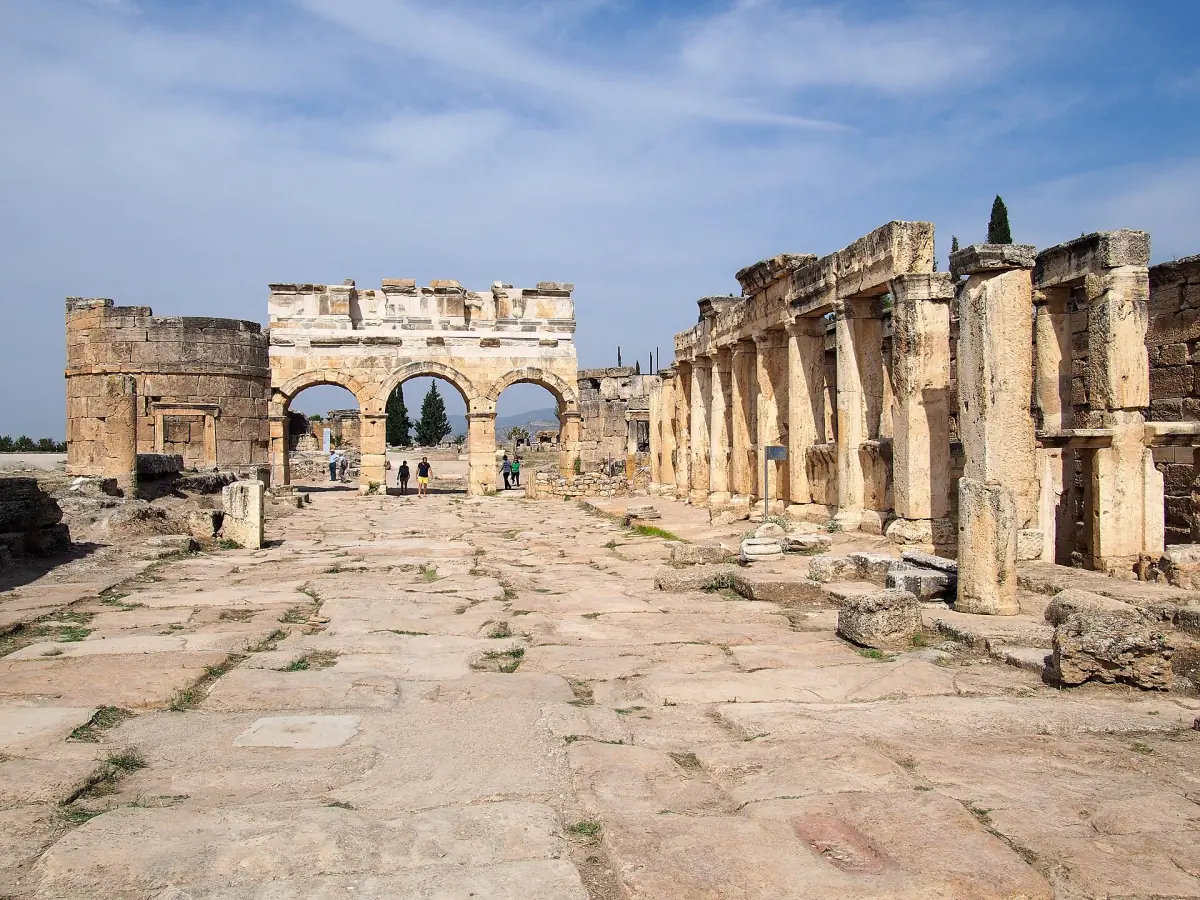
Hierapolis through the centuries
From the Attalids to the late Middle Ages.
| Period | What happened |
|---|---|
| 2nd century BC | Founding of the city, linked to Eumenes II of Pergamon and the Attalids |
| AD 60 | Major earthquake, city rebuilt in Roman style |
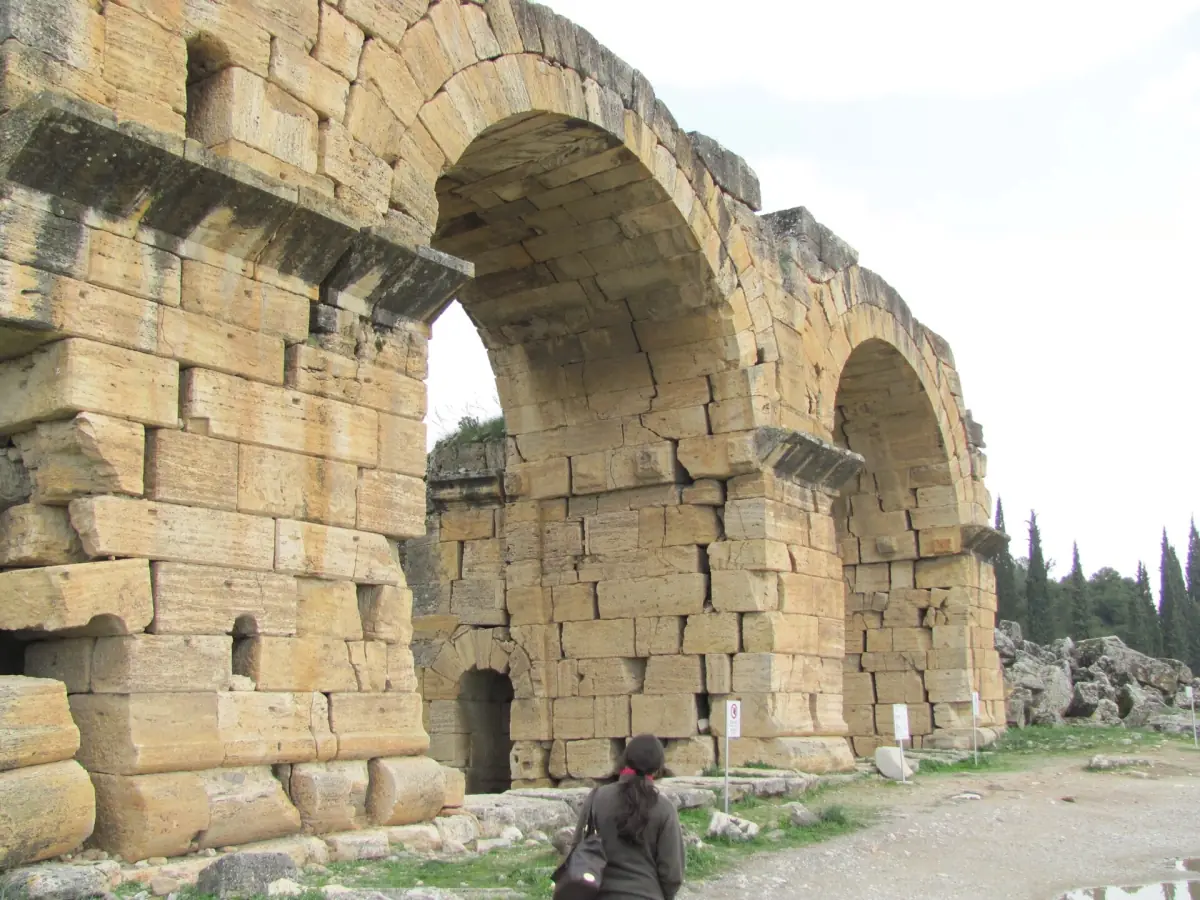
| AD 84–86 | Northern Domitian Gate built |
| 1st to 3rd century AD | Theatre built with 50 rows of seats, finished at the start of the 3rd century |
| 4th or 5th century AD | Octagonal Martyrium of Philip |
| 7th century | Heavy destruction from earthquakes |
| 14th century | Final abandonment after an earthquake |
For most visitors, the AD 60 rebuild and the later Christian centre are the two ideas to keep in mind as you walk through the ruins.
Our pick: the history with a guide
Our take: a guided full day puts the ancient city and the travertines in order.
Hand-picked tours, booked through GetYourGuide. Prices are indicative starting prices in euros (as of October 2026). Tap a tour for live availability and the current price in your currency.
Pamukkale tours and day trips
Guided visits to Hierapolis and the terraces, with transfers, entry options and live prices and availability. Check what each tour includes before you book.
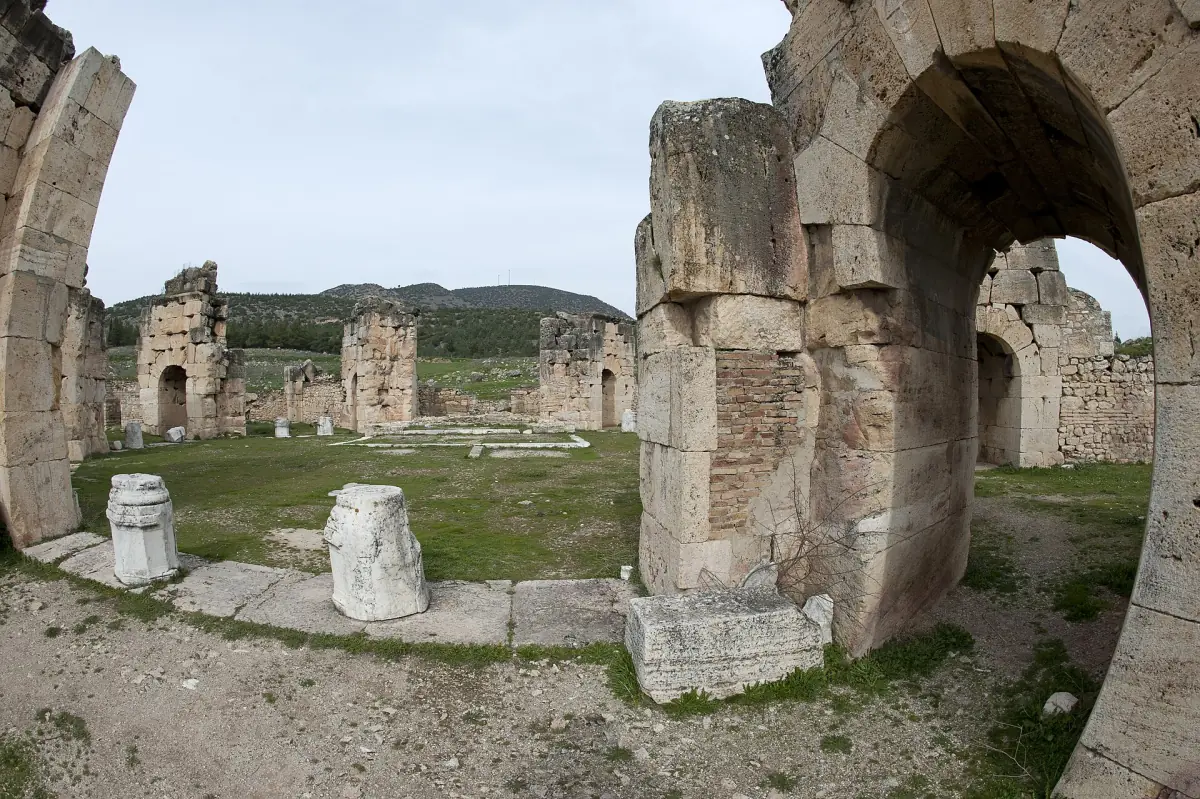
Roman city, Christian centre
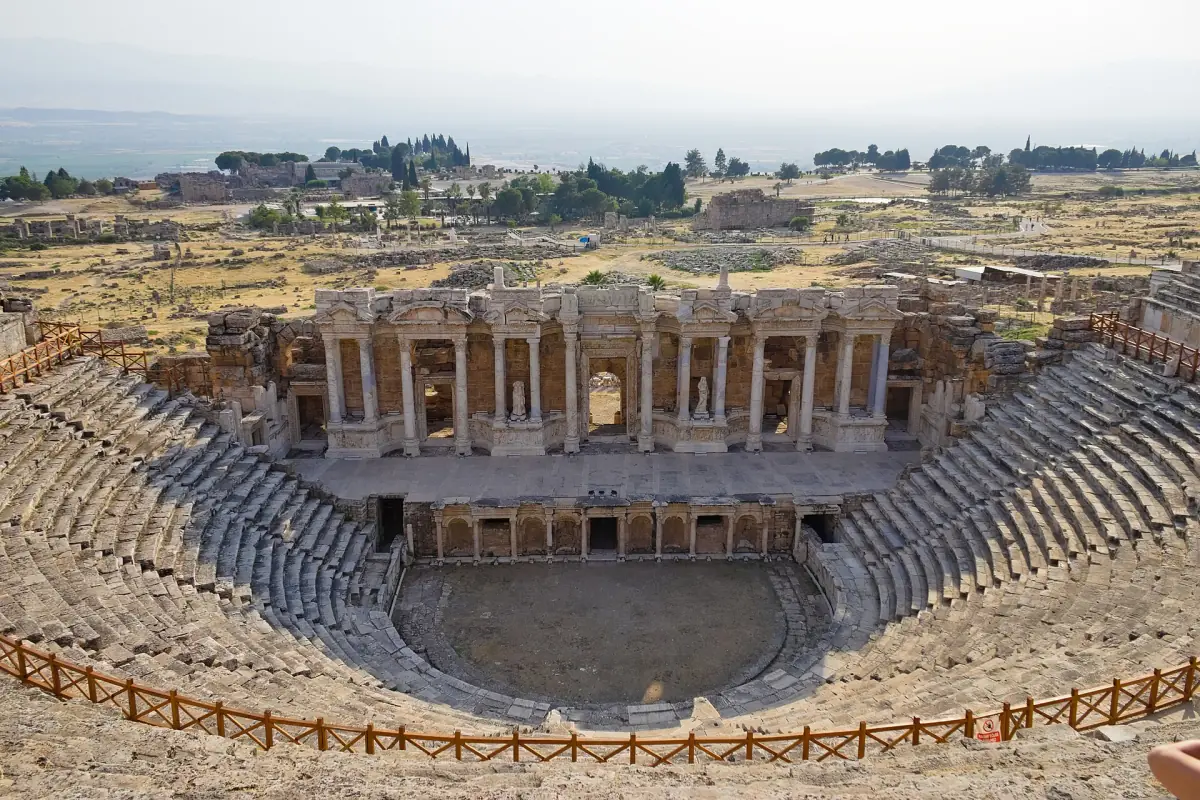
After AD 60 the city was rebuilt with Roman streets, a gate, baths and a large theatre. The theatre's stage building has reliefs with Apollo, Artemis and Dionysos. The cemetery outside the city, the necropolis, grew along the road with sarcophagi and tomb monuments.
Later Hierapolis became a Christian centre. The octagonal Martyrium of Philip stands on the hillside above the city. It dates to the 4th or 5th century AD. Do not mix it up with the church and tomb studied later.
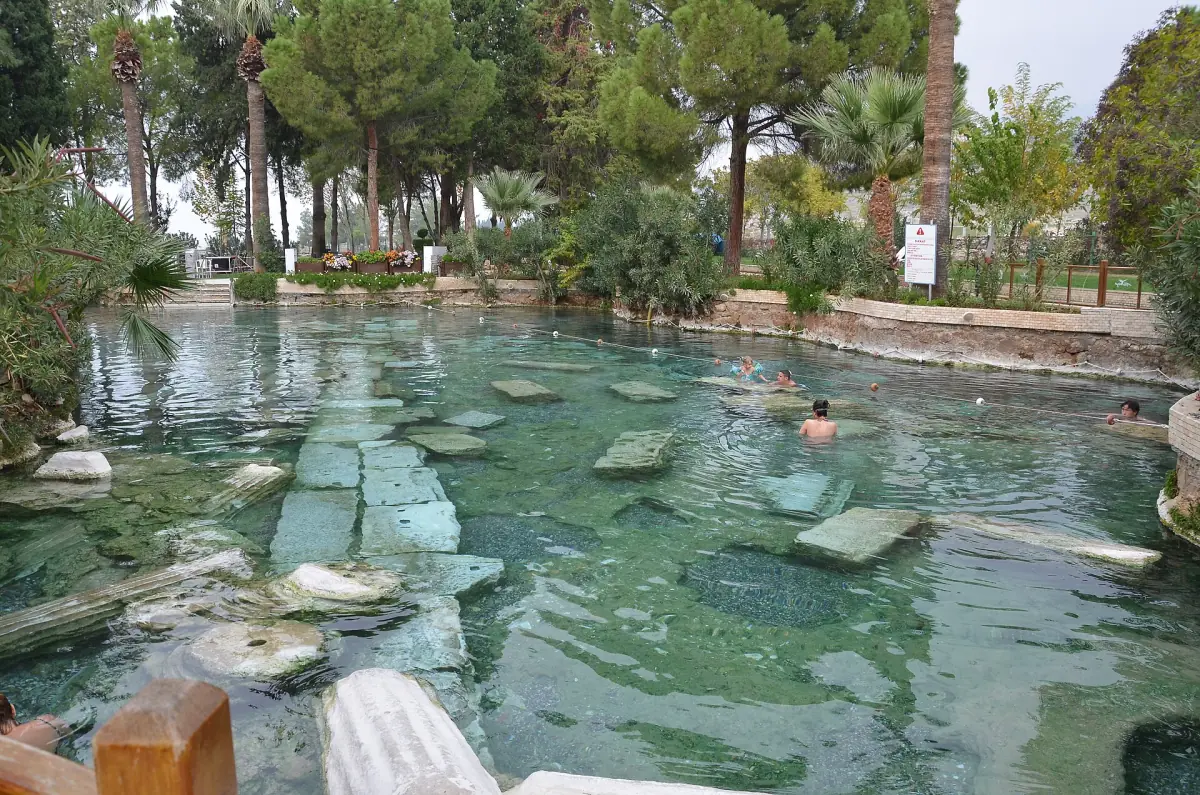
The Antique Pool carries its own story. Ancient columns lie in the warm water after earthquakes and the thermal springs shaped the basin. The name Cleopatra's Pool comes from a legend that Cleopatra bathed here. Nothing proves that she did. The Cleopatra's Pool guide covers the pool as it is today.
Hotels on the terraces and how they were removed
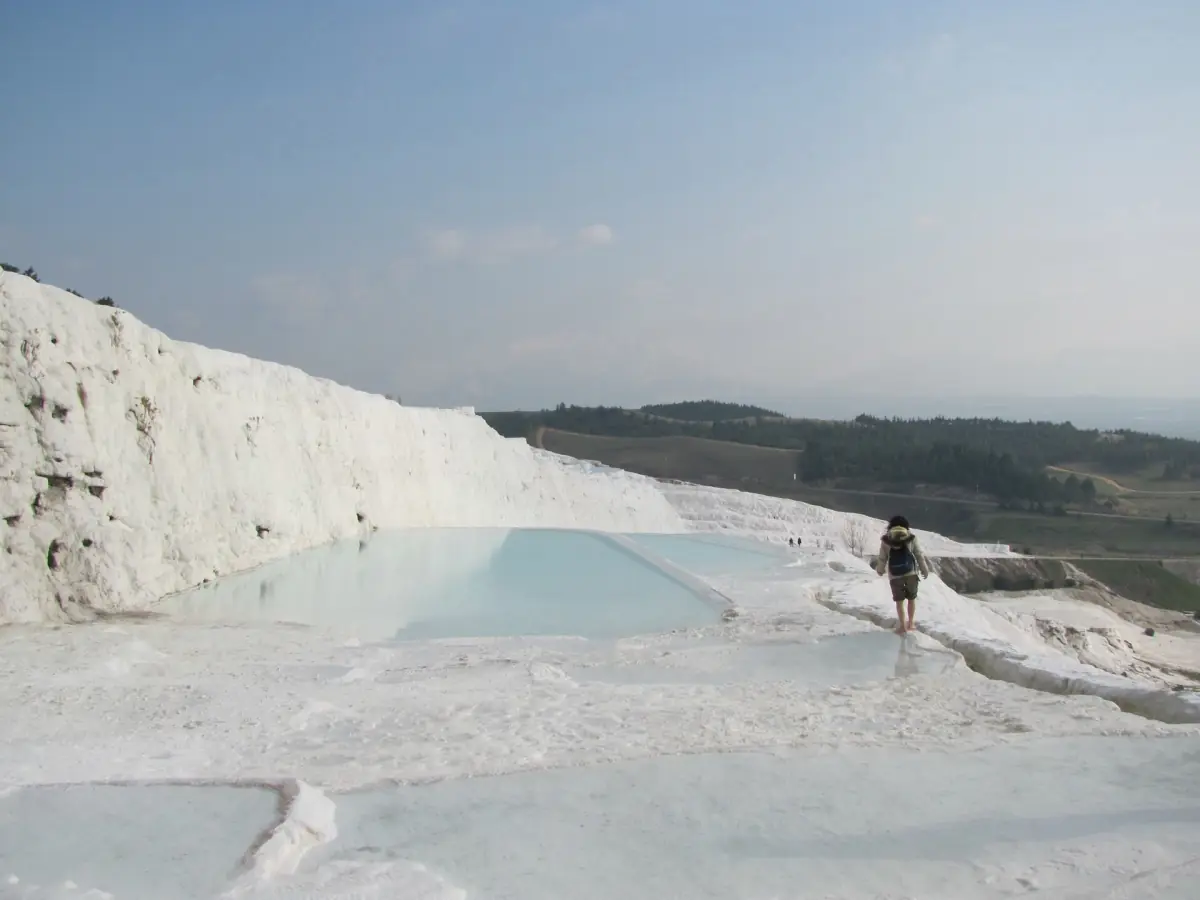
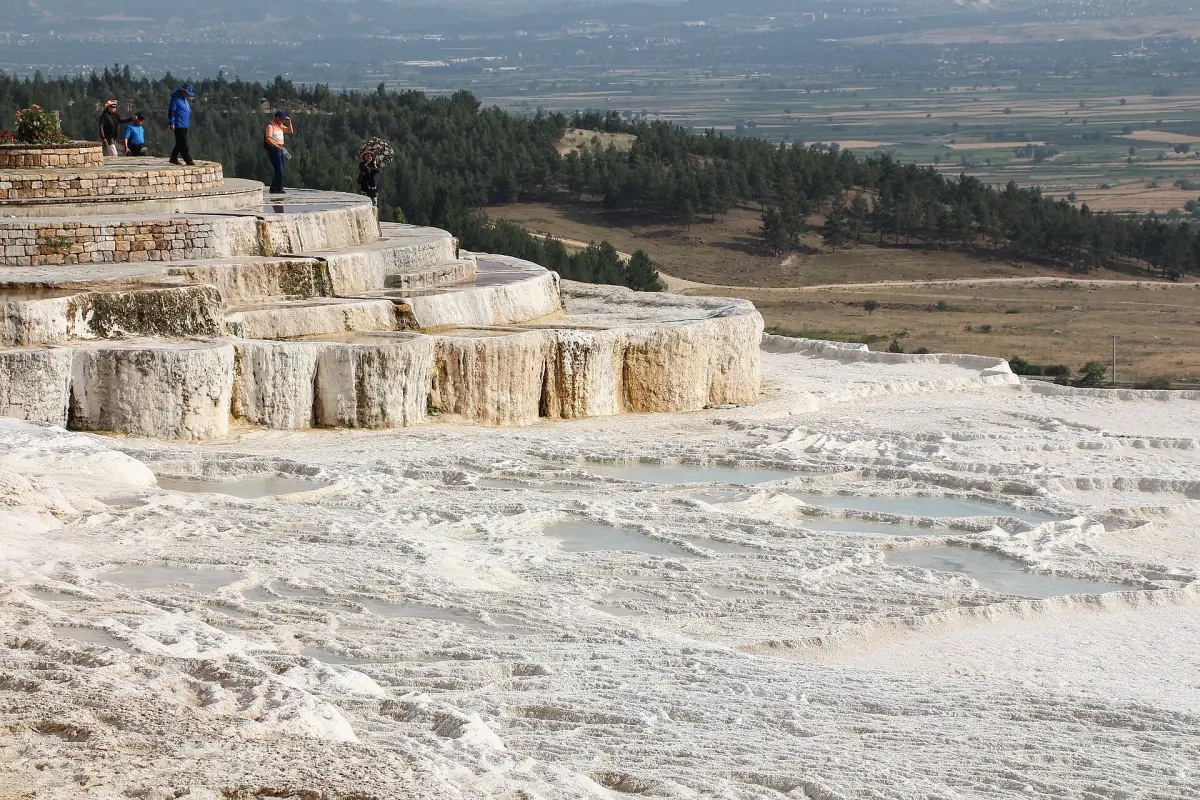
From the 1970s, hotels grew up on the slope. In the 1990s, restrictions came in. A development plan from 1992 started a process of taking the buildings down, and it did not happen in a single year for all hotels. The last two hotels were demolished in 2001. The road through the terraces was closed, and a network to distribute the water was built.
The result is what visitors see today: footpaths instead of the old road, controlled water flow and barefoot access on the open parts. Read how this works in practice on the travertines page.
Where to see each period
The history on the ground.
Roman city
The Domitian Gate and the theatre with its 50 rows are the clearest Roman traces. The theatre was restored at the stage building between 2010 and 2013.
Christian centre
The octagonal martyrium on the hillside is the main sight from this period. It stands on the hillside above the main ruins.
Finds in the museum
The archaeological museum in the Roman baths shows sarcophagi, sculpture, small finds and finds from the theatre in three rooms. It opened in 1984, reopened in 2000 after restoration and is free.
Pamukkale in the wider story of the region
Neighbouring ancient cities.
Pamukkale sits among several ancient sites in the Denizli region. Laodikeia, near Denizli, has its own column street, and the guide to Laodikeia covers it. Ephesus has its own story, told in the history of Ephesus.
If you want to see the old city in person, one entry ticket covers the ruins and the terraces. It is €30 for foreign adults in 2026. See Pamukkale tickets for children, the Antique Pool and the museum.
More about Pamukkale
After the history, the visit.
Pamukkale history: frequently asked questions
When was Hierapolis founded?
In the 2nd century BC. The city is linked to Eumenes II of Pergamon and the Attalid dynasty, and no single founding year is fixed.
What happened in AD 60?
A major earthquake struck the city. Afterwards Hierapolis was rebuilt as a Roman city and later became a Christian centre.
When did Pamukkale become a World Heritage Site?
In 1988. Hierapolis-Pamukkale is a mixed natural and cultural site.
When were the hotels on the terraces removed?
It was a process, not a single year. After restrictions in the 1990s and a plan from 1992, buildings came down over time. The last two hotels were demolished in 2001.
Is Pamukkale in danger from earthquakes now?
The earthquakes on this page are historical events. This page gives no forecast, and it does not say anything about how safe the area is today.
Is this the official history page of the site?
No. This is an independent travel guide and not run by the site operator, a museum or a ministry.