The travertines of Pamukkale in brief
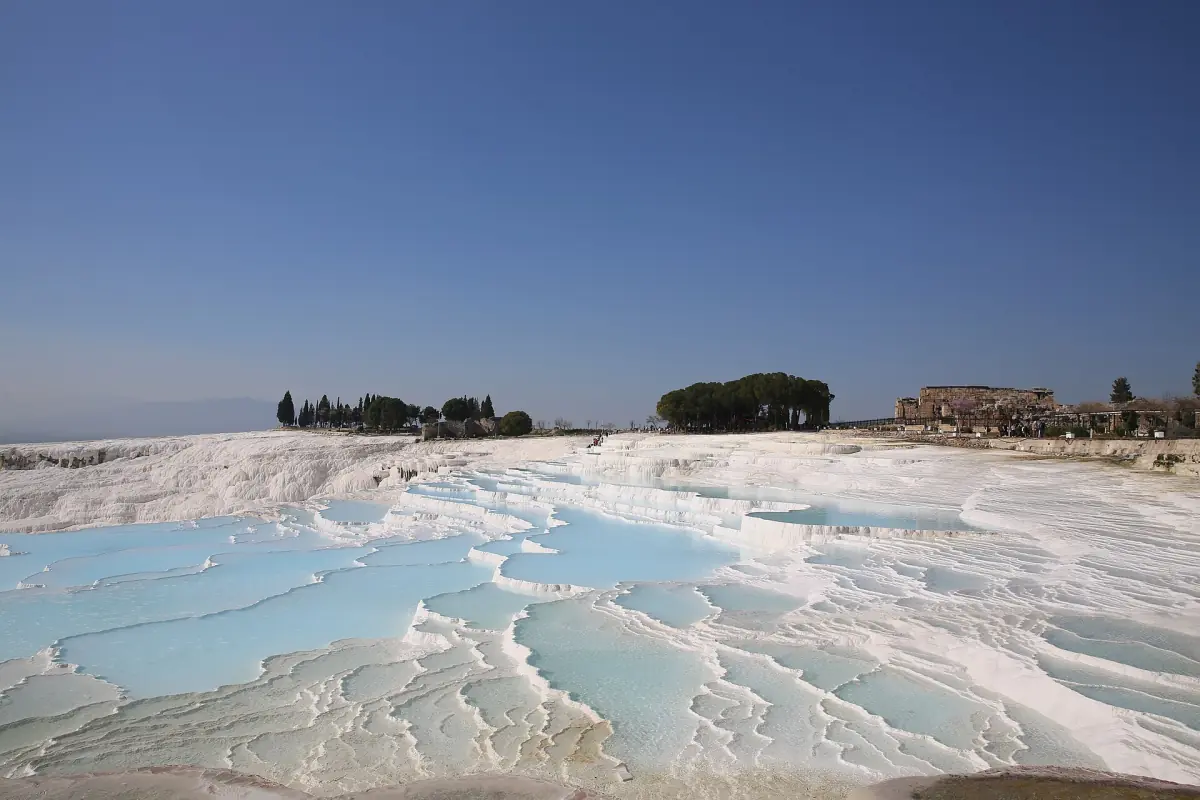
The travertines are terraces of white lime deposit on the slope above the village. Warm spring water rich in calcium hydrogen carbonate runs down the hill. When it loses carbon dioxide, it leaves calcium carbonate behind. That fresh deposit gives the surface its bright white colour. It is not snow, ice or salt, and the terraces are still forming today.
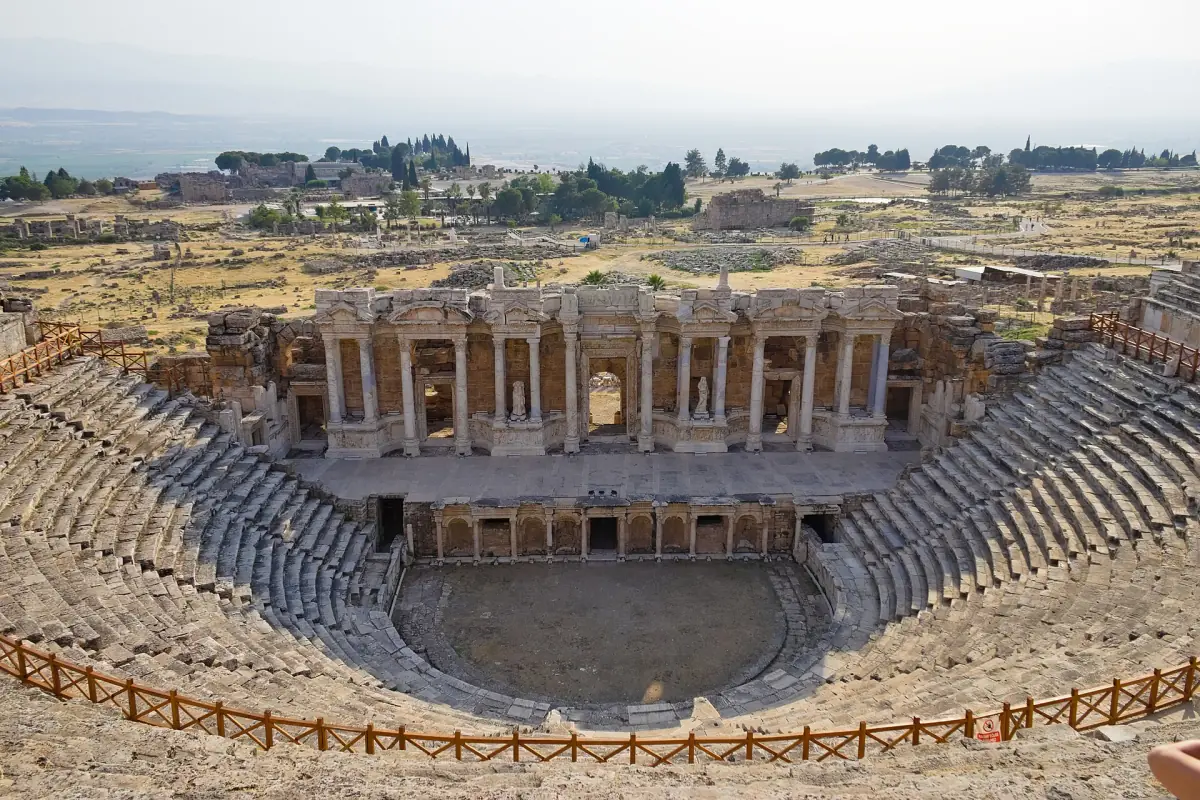
Pamukkale means roughly "cotton castle" in Turkish. The terraces and the ancient city of Hierapolis share one UNESCO listing from 1988. They also share one entry ticket: €30 for foreign adults in 2026. You walk on the designated paths and on parts of the deposits where visitors are allowed, not across every white surface.
The barefoot rule and the paths
Simple rules that protect the terraces.
Shoes off on the deposits
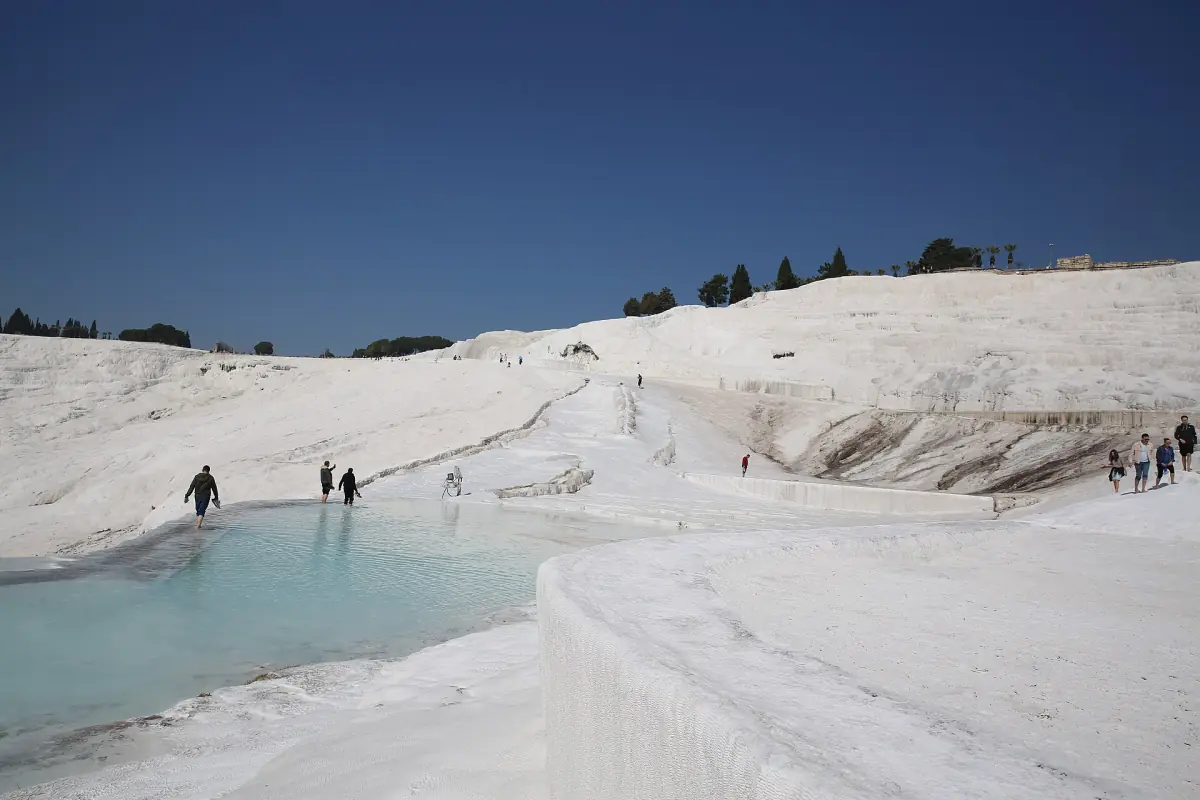
Take your shoes off when you step onto the lime deposits, and keep to the main paths. The rule is about the white surface. It does not apply to the stone paths among the ruins of Hierapolis, where shoes are fine.
Not every terrace is open
The natural terraces are closed to visitors as a protective measure, and separate bathing areas were built for swimming. You will see roped-off basins and signs. Treat them as closed, even if the water looks inviting.
Slippery and sharp
Wet deposits are slippery, and the edges of basins can be sharp. Walk slowly, carry your shoes and follow the paths that are open on the day. Local barriers and signs are what counts.
Swimming is elsewhere
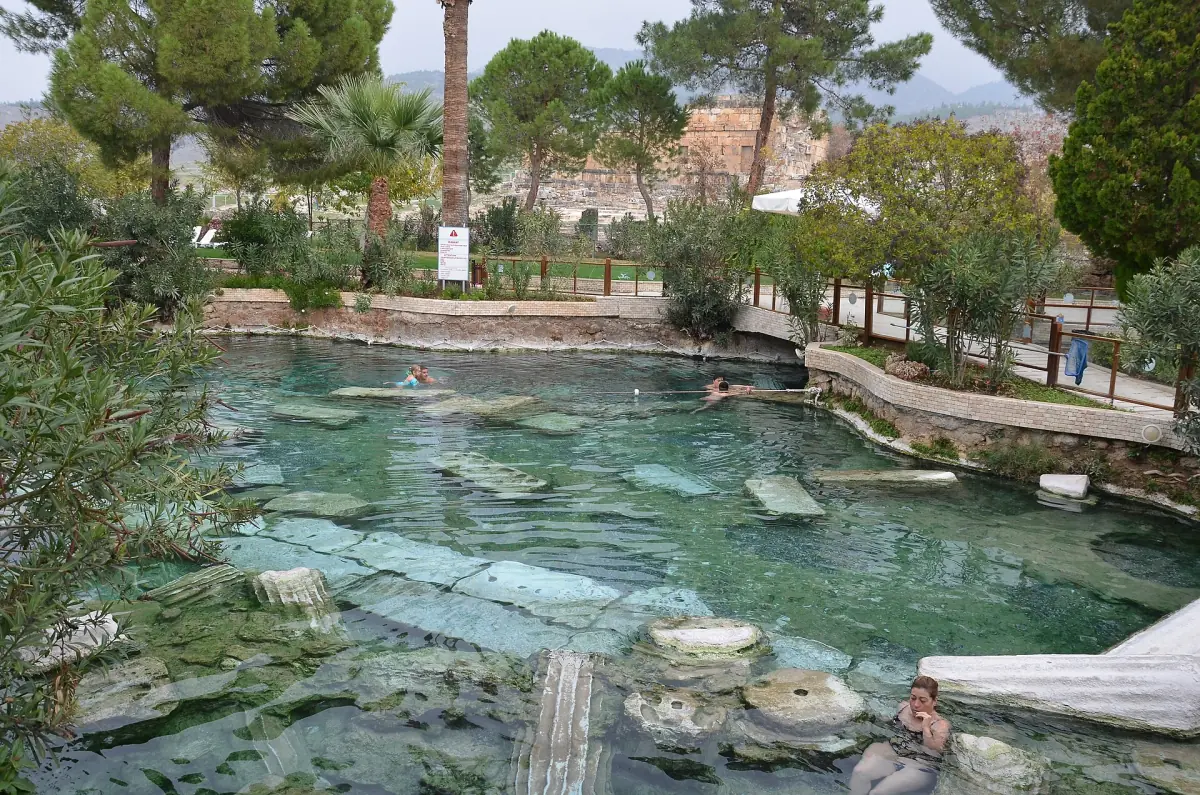
You swim in the Antique Pool, which is a separate pool among the ruins and costs extra. The Cleopatra's Pool guide has tariffs and rules.
Our pick: the travertines on a day trip
Our take: this trip from Side leaves time to walk the terraces barefoot.
Hand-picked tours, booked through GetYourGuide. Prices are indicative starting prices in euros (as of October 2026). Tap a tour for live availability and the current price in your currency.
Pamukkale tours and day trips
Guided visits to the terraces and Hierapolis, with transfers, entry options and live prices and availability. Check what each tour includes before you book.
Pools and water levels
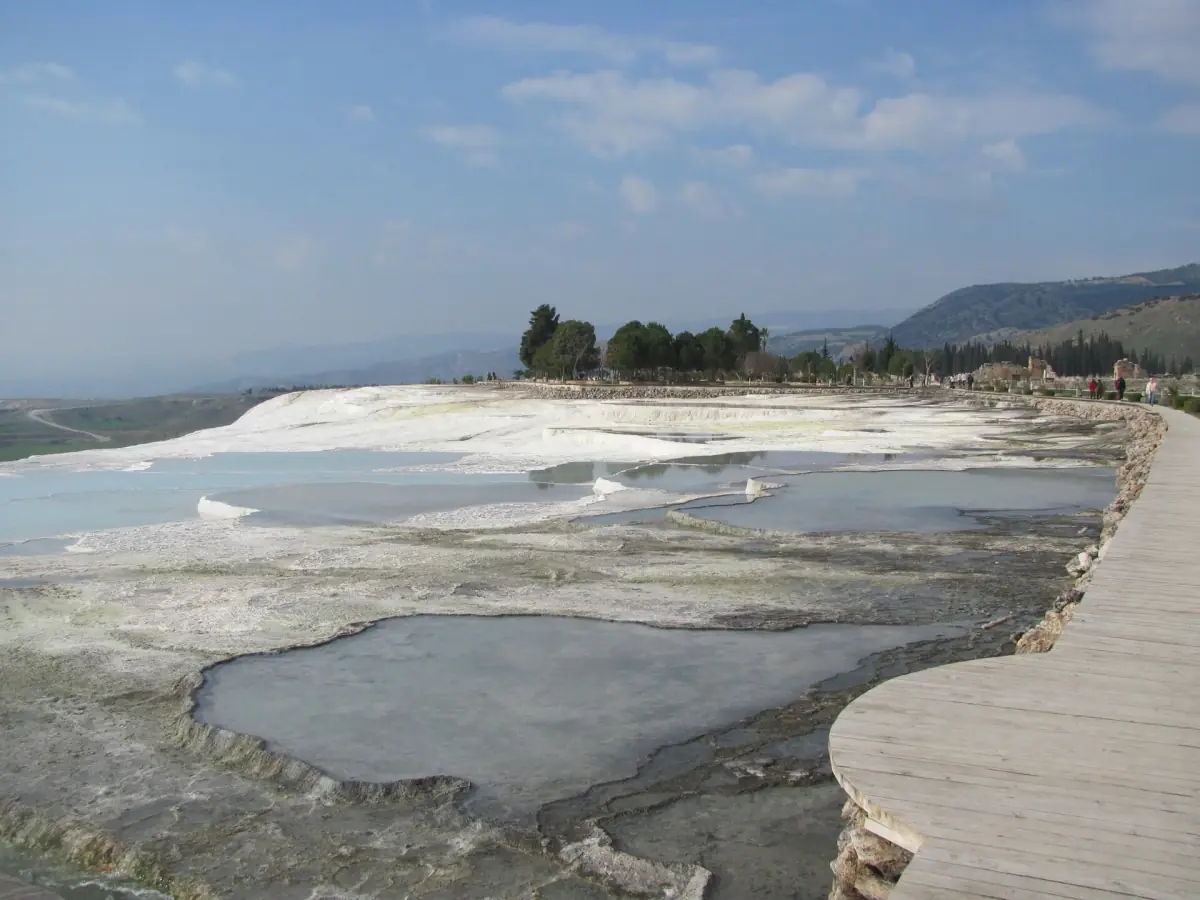
The water is managed. It is distributed to the terraces by a programme, and some basins are dried out for a while. This lets the deposits harden and stops algae from growing. As a result, not every basin is full all the time, and a visit can show you full blue basins or dry white steps.
There is no live water-level display and no fixed rotation to look up. Do not plan a visit around full pools, and enjoy the terraces for what they are on the day. The temperature at the spring outlet is 35.6 °C. The shallow basins you walk past are not measured, so do not expect the same warmth there.
For photos, the walkway at the edge of the terraces is a good place to stop. Check the opening hours first, because the gates and the footpath from the village close at different times.
What visitors can and cannot do
The short version.
| Activity | On the terraces | In the Antique Pool |
|---|---|---|
| Walk barefoot on the deposits | Yes, on the open paths | – |
| Wear shoes | No on the deposits, yes on stone paths | – |
| Swim | No, natural terraces are closed to visitors | Yes, with the extra fee |
| Enter closed basins | No | – |
| Drive onto the site | No, private cars are kept out | – |
For most visitors, the best plan is a slow walk up the open paths barefoot, followed by a stop in the ruins, and the pool if swimming is part of the day.
Why the terraces look different today
Hotels were built on the terraces from the 1970s. After restrictions in the 1990s, they were taken down in a process that ended with the last two hotels in 2001. The road through the terraces was closed, and a water distribution network was built. Today visitors use paths instead of the old road. Read the full story on the history page.
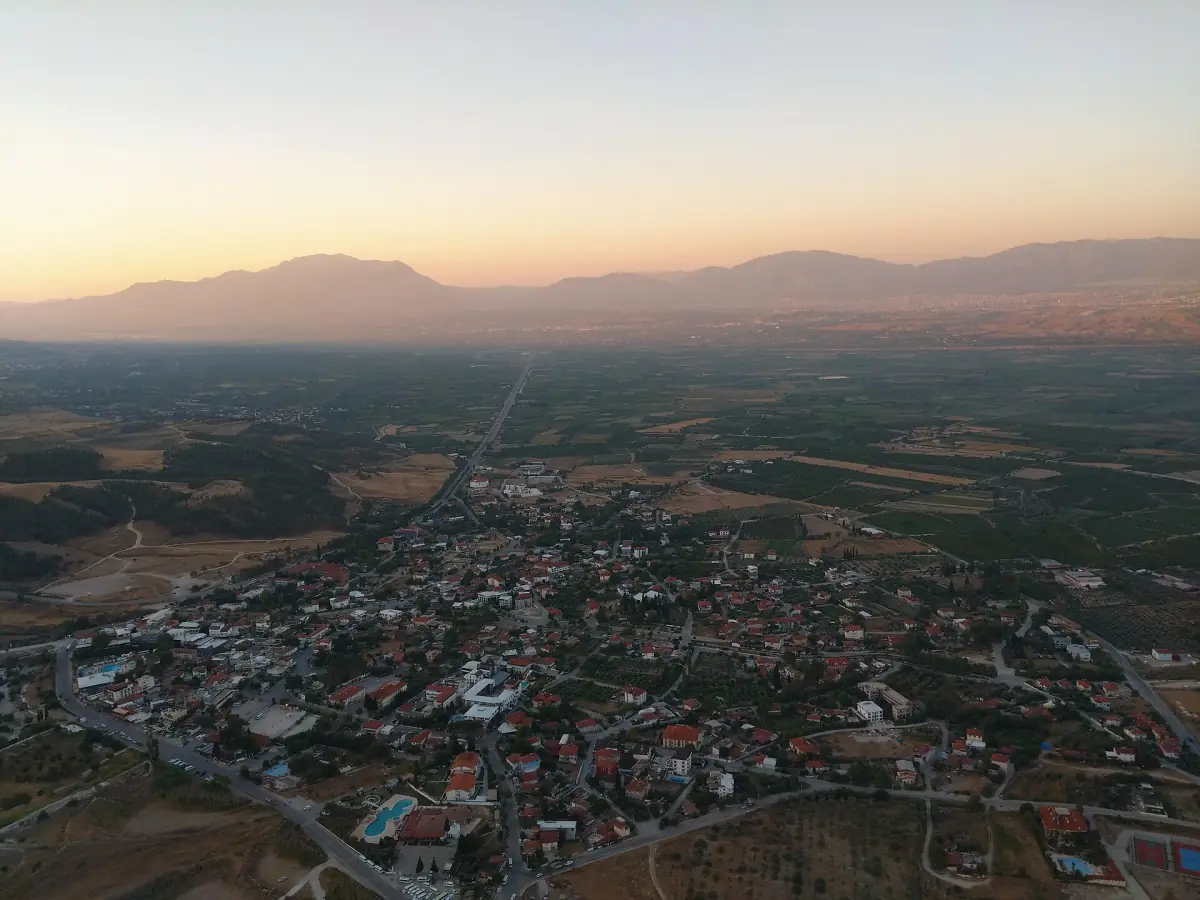
The village stands at the foot of the slope, and the pond in the village is visible from the terraces. If you want a view of the whole slope, a hot air balloon flight shows it from above. Details for the wider region are in the guide to Pamukkale and Denizli.
Pamukkale travertines: frequently asked questions
Do I have to walk barefoot on the travertines?
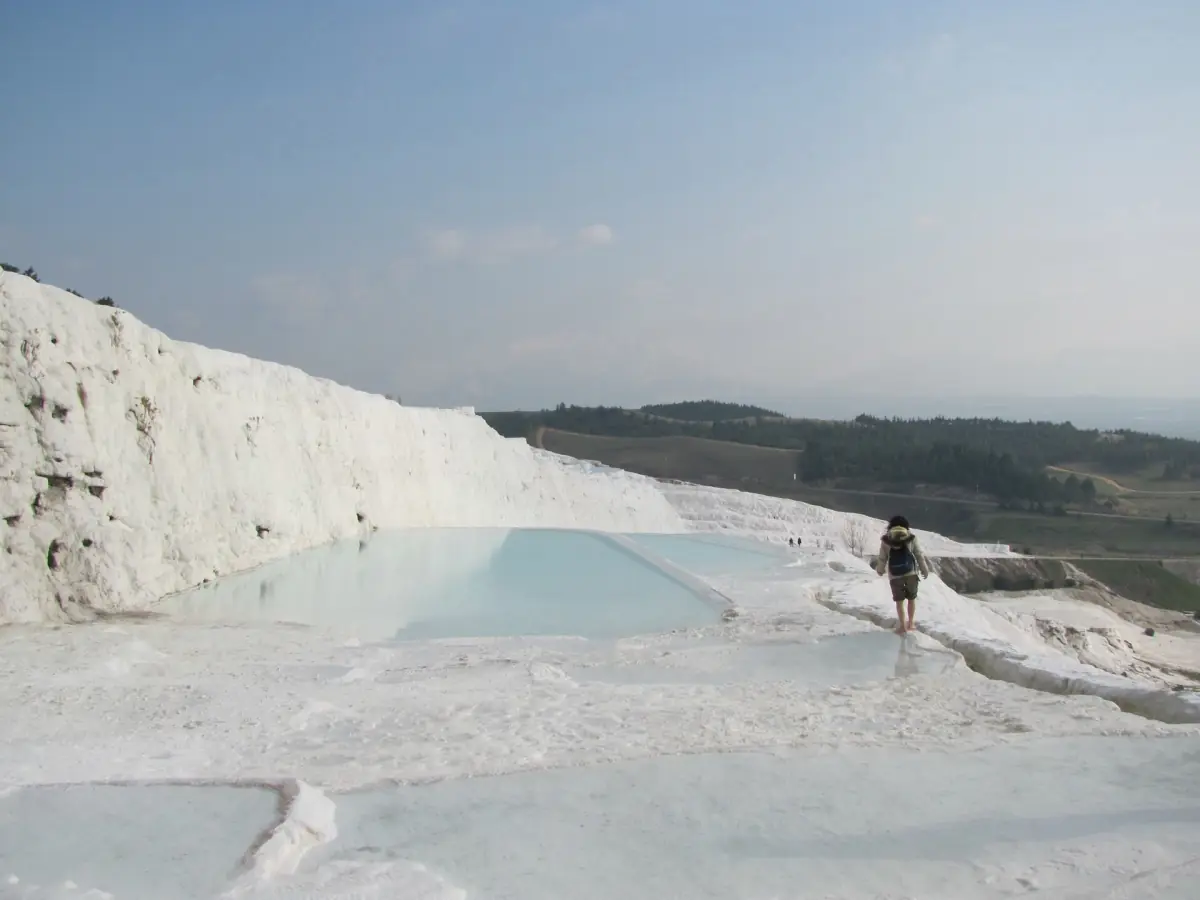
Yes, on the deposits. Take your shoes off when you step onto the white lime and keep to the main paths. On the stone paths among the ruins of Hierapolis, shoes are fine.
Can I swim in the travertine pools?
No. The natural terraces are closed to visitors as a protective measure. Swimming is in the Antique Pool, which costs extra on top of the entry ticket.
Are the pools always full of water?
No. The water is distributed by a programme, and some basins are dried for a while to let the deposits harden and to stop algae. Some days show more water than others, and there is no live display.
Why are the terraces white?
Fresh deposits of calcium carbonate from the spring water make the surface bright. The material is lime, not snow, ice or salt.
How warm is the water?
The spring outlet is 35.6 °C. The shallow basins on the terraces are not measured, so do not expect the same temperature.
Is this the official Pamukkale website?
No. This is an independent travel guide and not run by the site operator or a ministry. Check the current rules on site before you go.