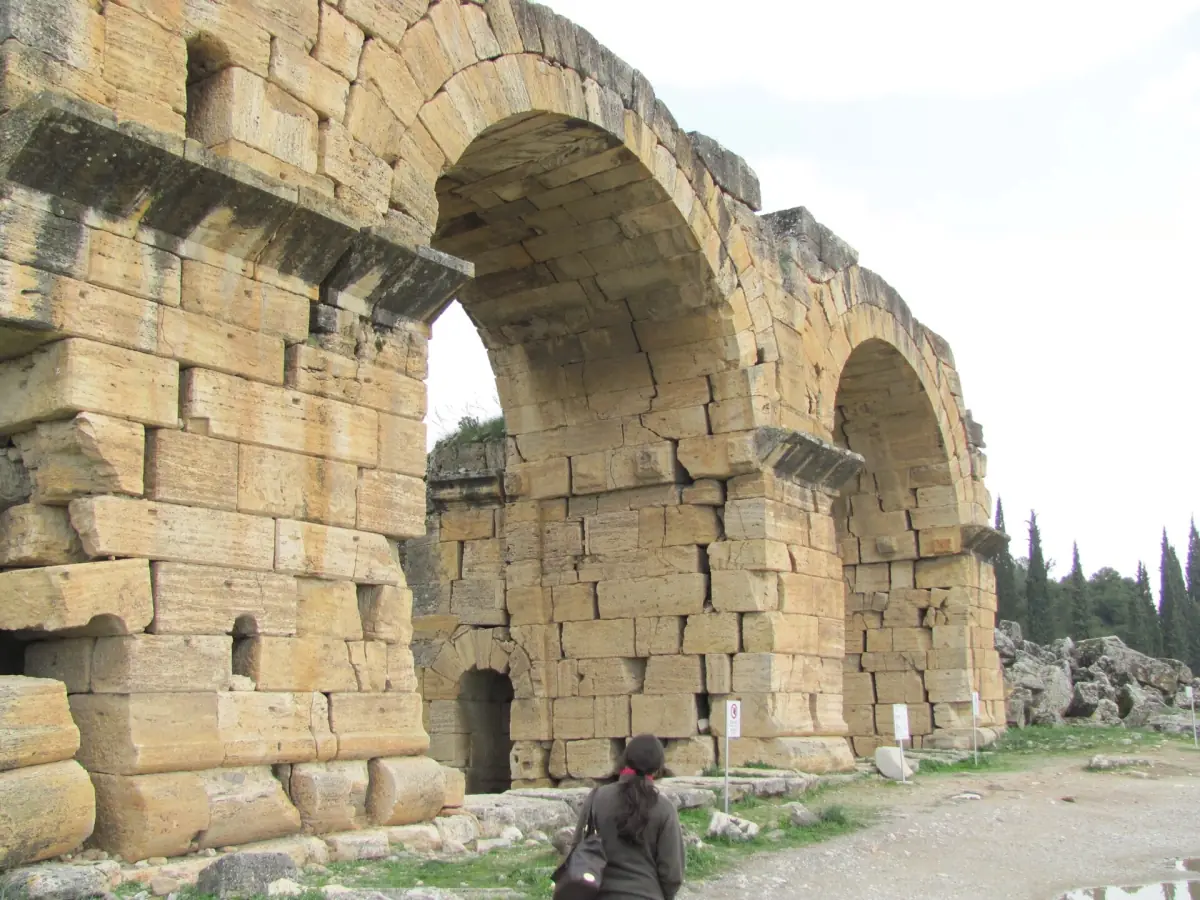
Hierapolis in brief
Hierapolis lies about 18 km north of Denizli, on the slope above the white terraces. The city goes back to the 2nd century BC and is linked to Eumenes II of Pergamon and the Attalid rulers. After a major earthquake in AD 60 it was rebuilt as a Roman city, and later it became a Christian centre. Together with the travertines it is a UNESCO World Heritage Site, inscribed in 1988.
One entry ticket covers the ruins and the terraces. It costs €30 for foreign adults in 2026. Foreign children up to and including age 8 enter free with a passport or ID card. Swimming in the Antique Pool costs extra, and the archaeological museum is free. If you prefer a guide, compare guided Pamukkale tours that include the ruins.
The main sights of Hierapolis
Theatre, necropolis, gate and martyrium at a glance.
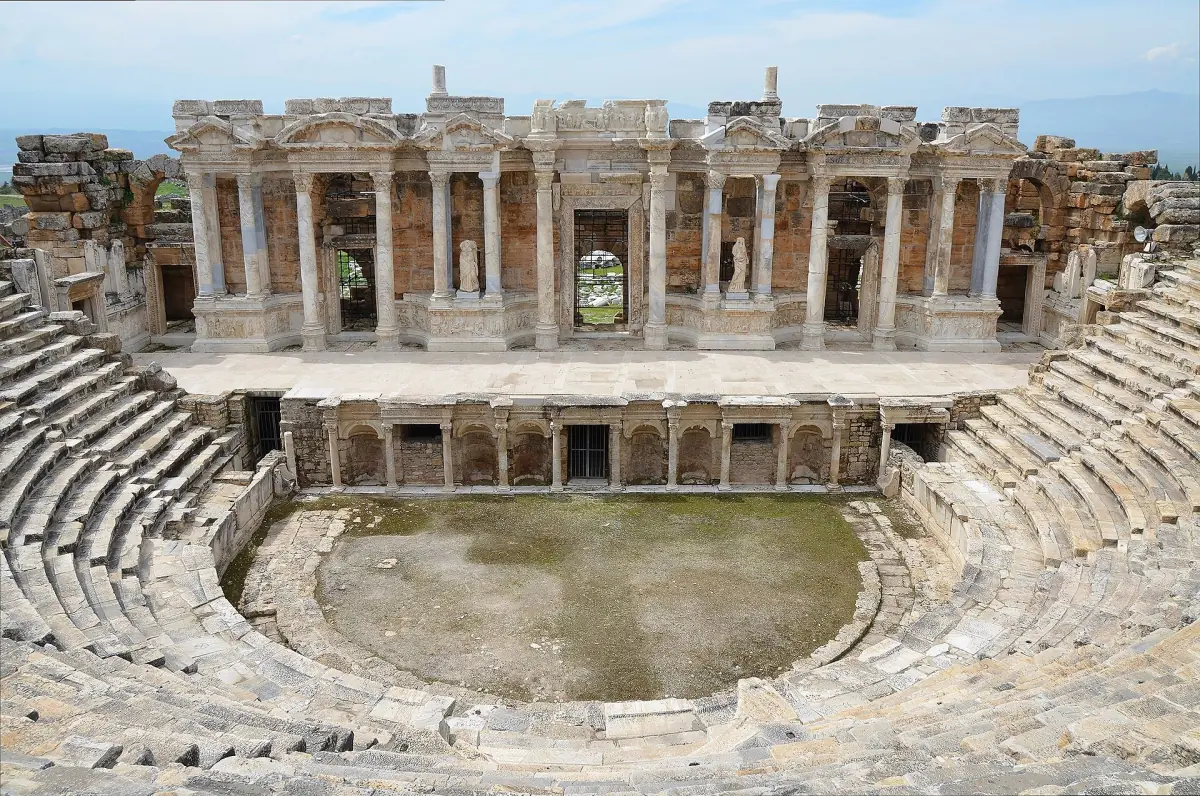
Roman theatre
The theatre has 50 rows of seats. Building began in the second half of the 1st century AD and finished at the start of the 3rd century. Reliefs on the stage building show scenes with Apollo, Artemis and Dionysos. The stage building was restored between 19 April 2010 and 10 June 2013. It held an estimated 12,000 to 20,000 people.
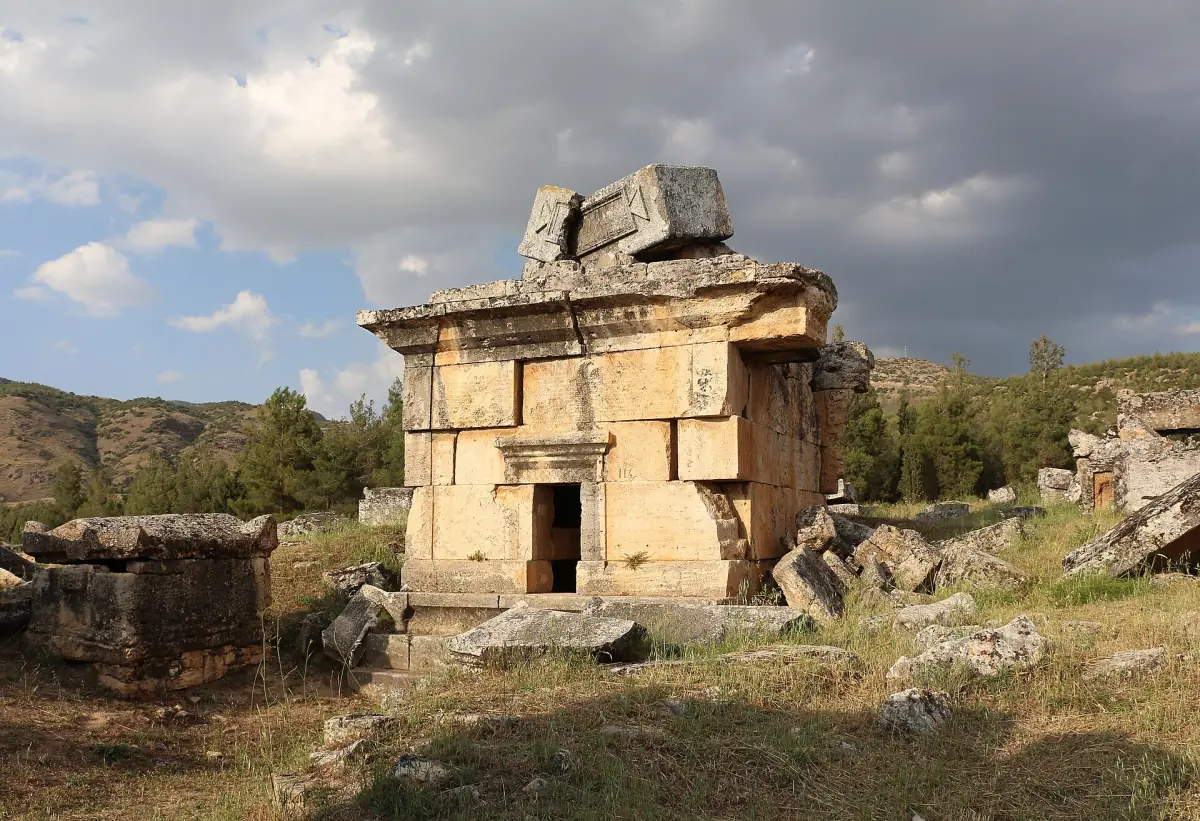
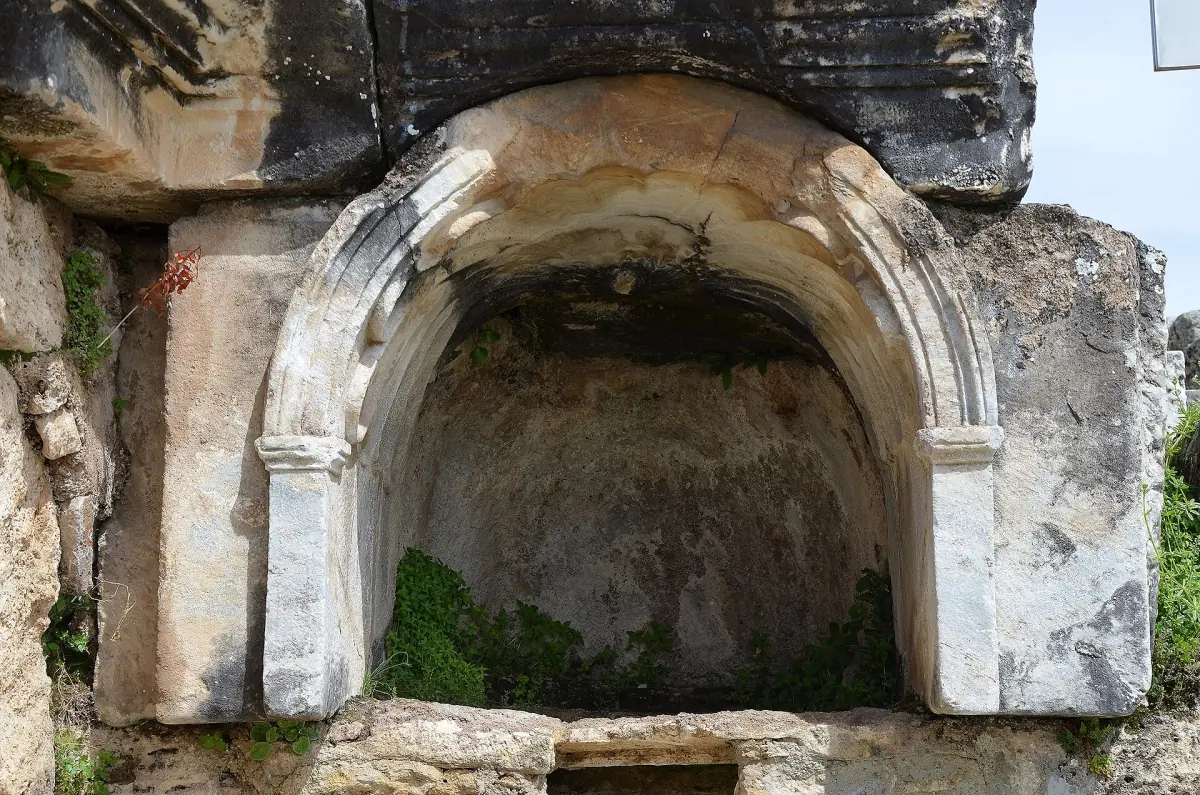
Necropolis
The cemetery is a large field of sarcophagi and tomb monuments on both sides of the old road. It stretches roughly 1 km to more than 2 km, depending on where you count. Some tombs are shaped like small houses. Stay on the marked paths and do not climb on the monuments.
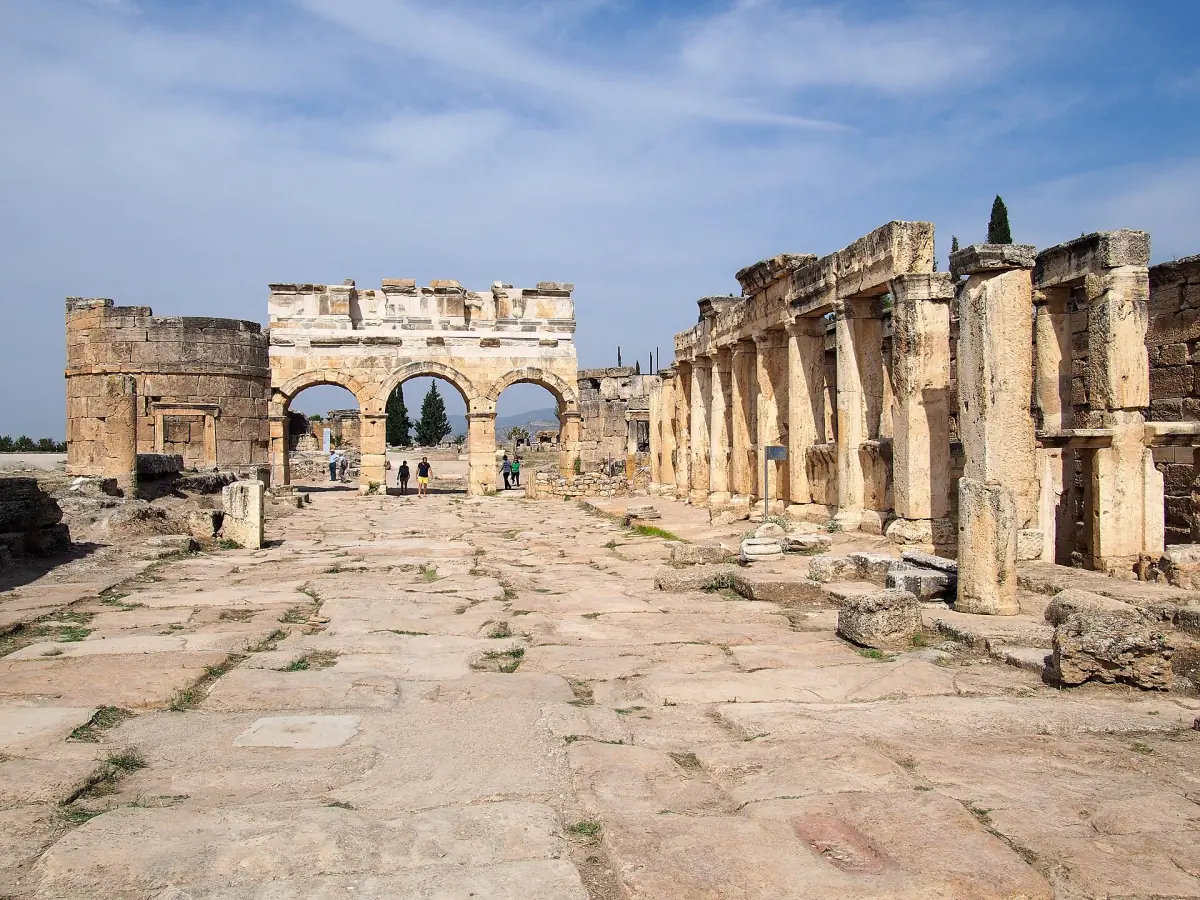
Domitian Gate
The northern gate dates to AD 84–86 and is a separate monument from the later Byzantine gates. Do not confuse it with the north entrance of today's site, where the ticket offices are.
Martyrium of Philip
The octagonal martyrium stands on the hillside above the city and dates to the 4th or 5th century AD. It is a memorial building, and it should not be mixed up with the church and tomb that were studied later.
Plutonion
The Plutonion was a sanctuary of Pluto, a sacred cave. Poisonous gases rise underground there. Keep behind the barriers, do not enter openings and follow the signs.
Archaeological museum
The museum sits in the Roman bath complex. It has three exhibition rooms: sarcophagi and sculpture, small finds, and finds from the theatre. It opened on 1 February 1984 and reopened after restoration on 24 April 2000.
Our pick: Hierapolis with a guide
Our take: if you are already in Pamukkale, a guide makes the ancient city much easier to read.
Hand-picked tours, booked through GetYourGuide. Prices are indicative starting prices in euros (as of October 2026). Tap a tour for live availability and the current price in your currency.
Pamukkale tours and day trips
Guided visits to Hierapolis and the terraces, with transfers, entry options and live prices and availability. Check what each tour includes before you book.
Facts on the ruins compared
The table lists dates and sizes. Several of them are ranges, because the building phases and the measuring points differ.
| Site | Date | Size or detail |
|---|---|---|
| City founding | 2nd century BC | Eumenes II of Pergamon and the Attalids |
| Domitian Gate | AD 84–86 | Northern gate, not the ticket entrance |
| Theatre | 2nd half of the 1st century AD to early 3rd century | 50 rows, 12,000 to 20,000 seats |
| Martyrium of Philip | 4th or 5th century AD | Octagonal memorial building |
| Necropolis | – | About 1 km to more than 2 km along the road |
| Museum | Opened 1984 | 3 rooms, free entry |
For most visitors, the theatre, the Domitian Gate and the museum are the core of the visit, and the necropolis is the stretch worth adding if you have time to walk.
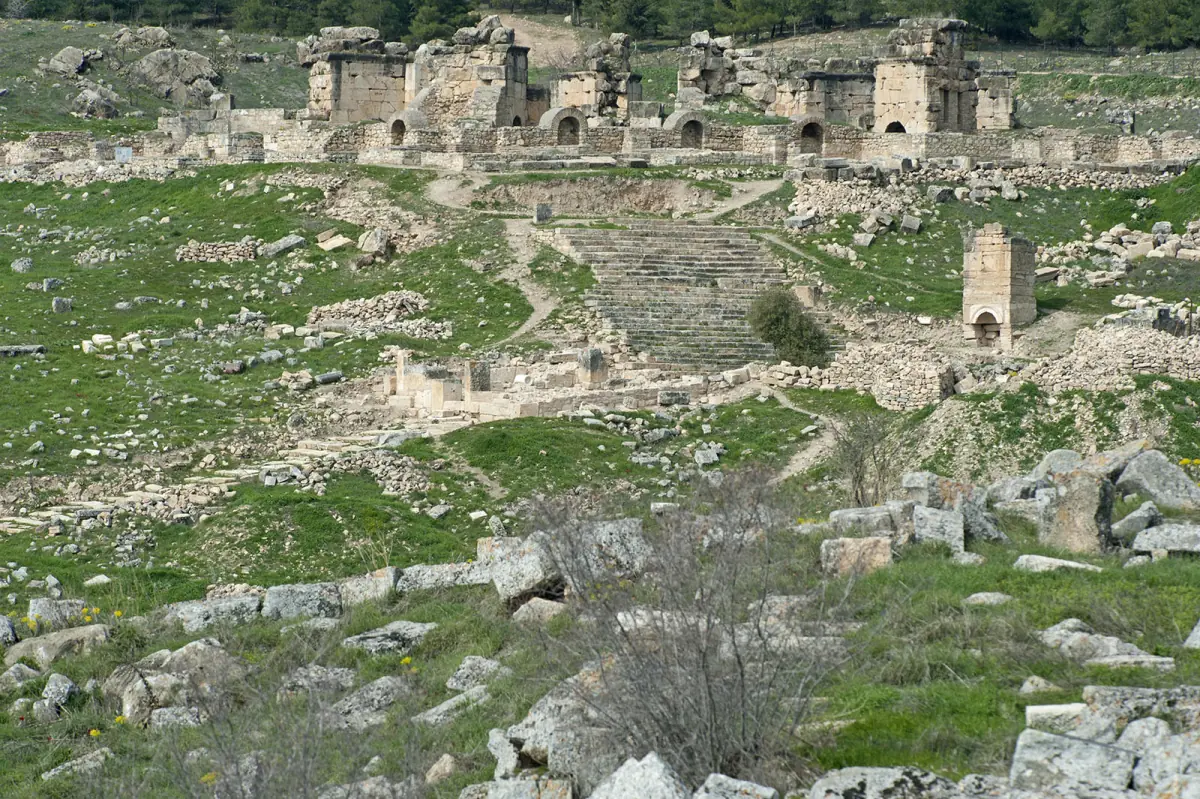
How to plan your visit to Hierapolis
The south and north gates open for visits at 08:00. From 14 September 2026 to 1 May 2027, day tickets are sold until 17:00 or 18:00, depending on the entrance. The footpath from the village is open 08:00–17:00. The museum closes at 17:00 or 17:30. Check the current timetable before you go, and see Pamukkale opening hours for the gates in detail.
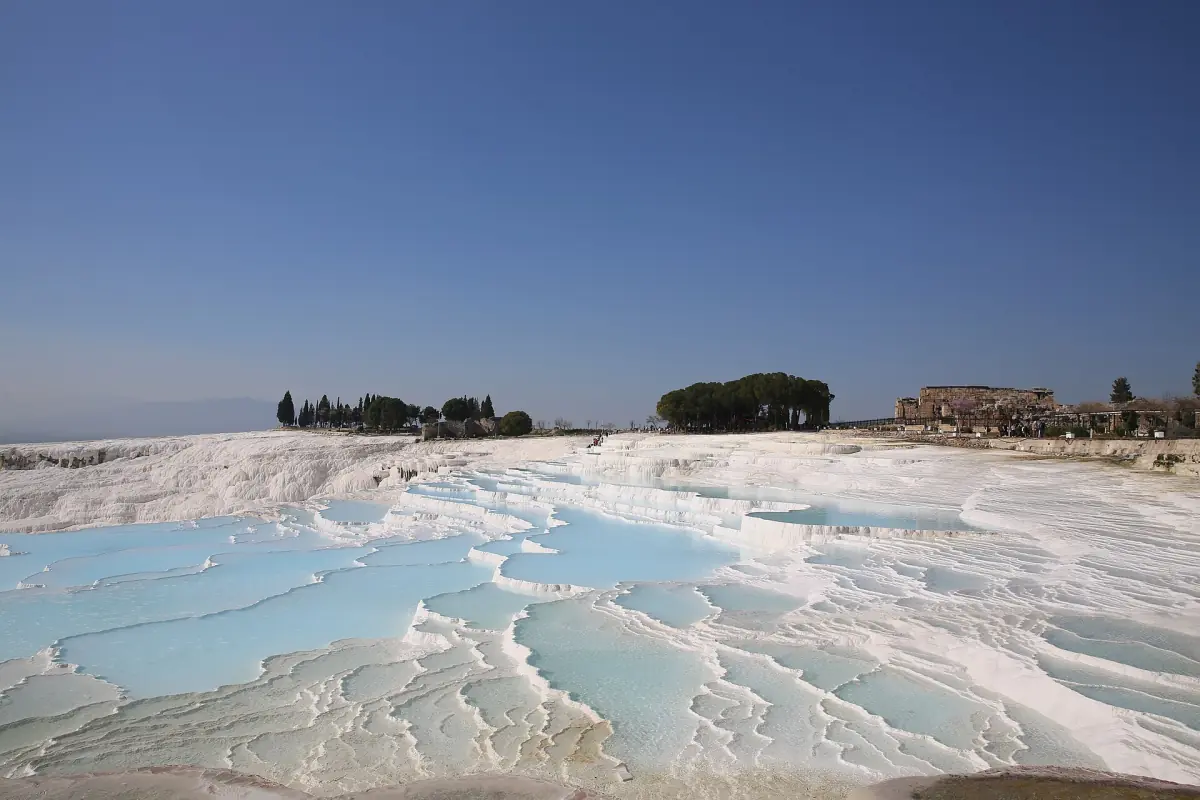
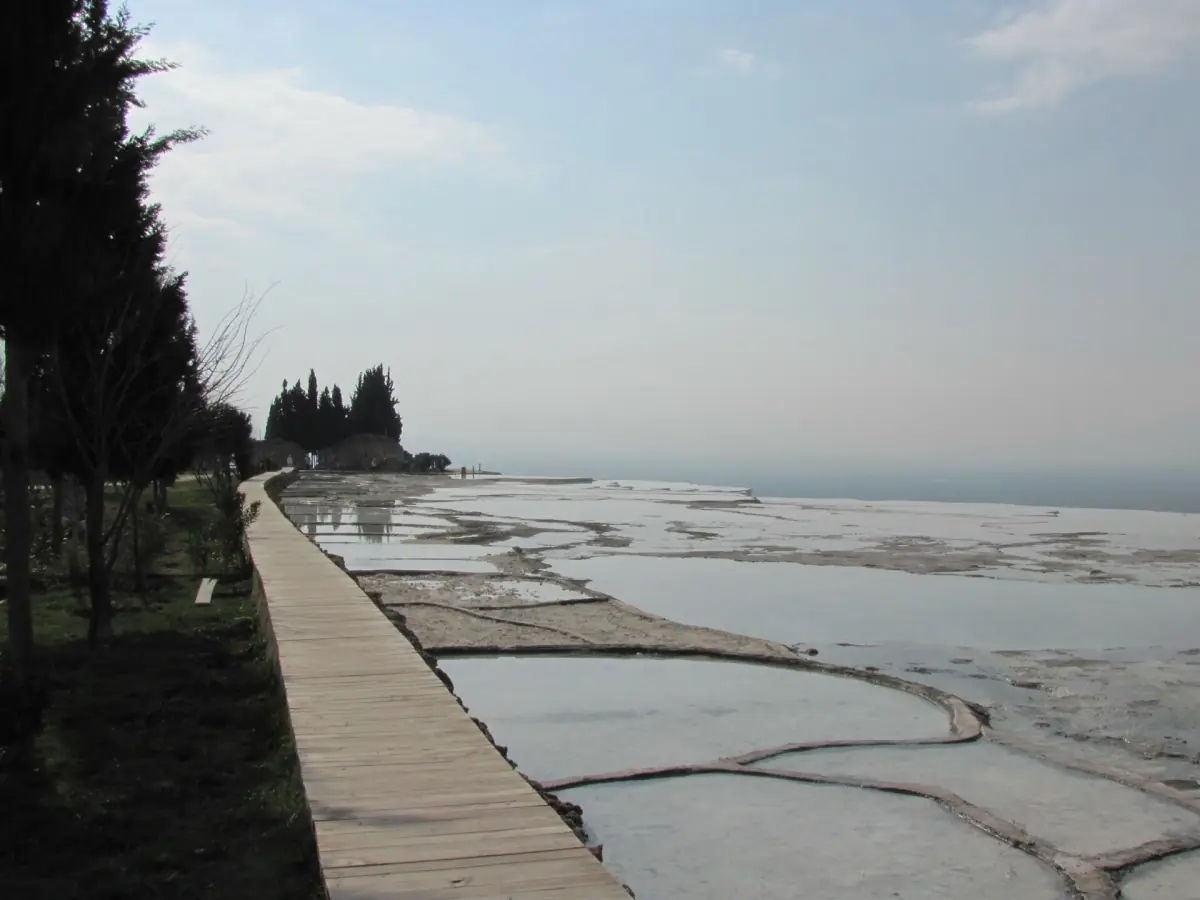
The barefoot rule belongs to the white travertine deposits. On the ruin paths, shoes are fine. Read more on the travertines page.
Average daily highs in Denizli reach about 35 °C in July and August. In summer, take water and sun protection, and plan breaks in the shade. A visit in spring or autumn is cooler, and the best time to visit page has the monthly figures.
Hierapolis and the Antique Pool
The pool lies inside the ruins.
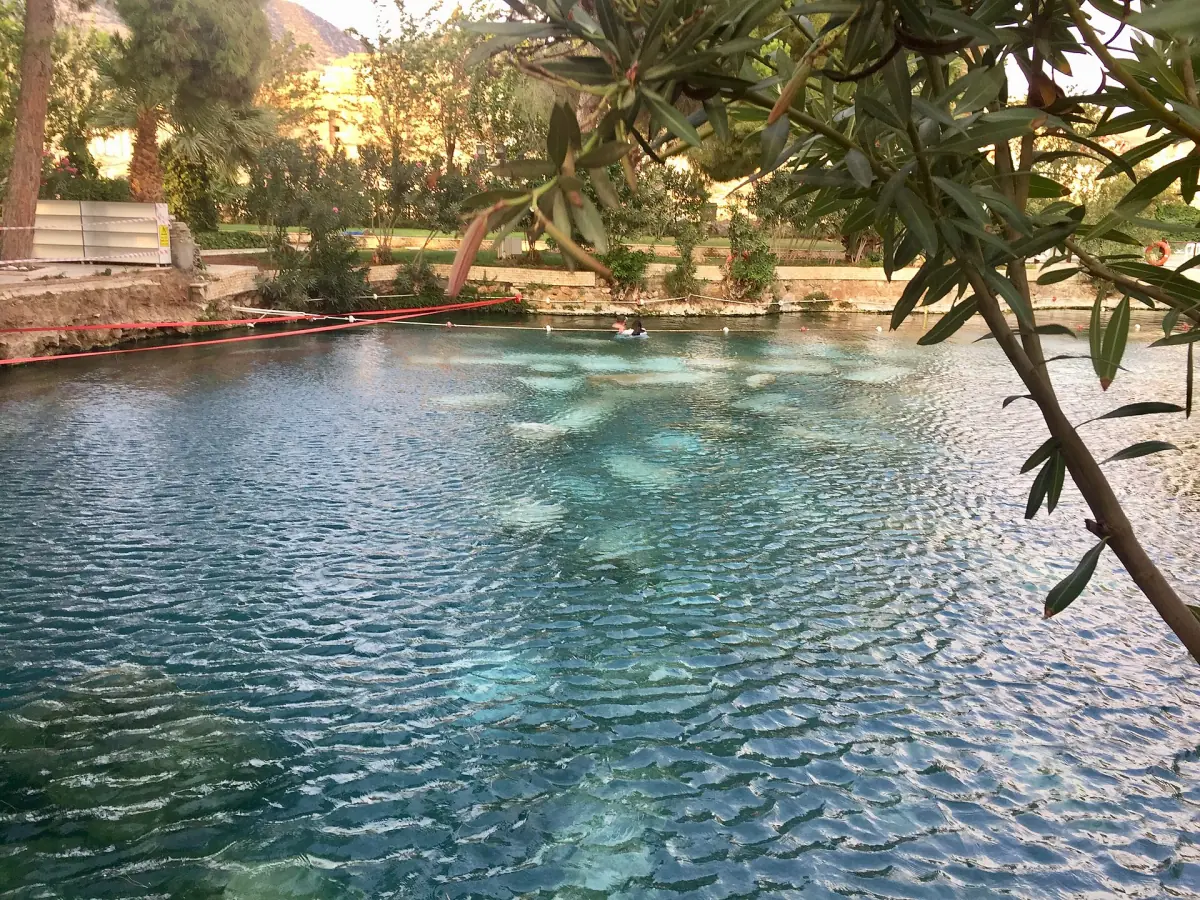
The Antique Pool, known as Cleopatra's Pool, fills with warm spring water among fallen ancient columns. The name comes from a legend that Cleopatra bathed here. There is no certainty that she ever came. Swimming is an extra fee on top of the entry ticket, and the Cleopatra's Pool guide lists the tariffs.
Laodikeia and the other sites around Denizli have their own place in the Hierapolis and Denizli guide. If you combine Pamukkale with the coast, Ephesus and Pamukkale explains how the two fit together.
Keep exploring Pamukkale
Where to go next.
History of Pamukkale
Earthquakes, the Roman rebuild and the removal of the hotels.
Cleopatra's Pool
Tariffs, rules and the legend behind the name.
The travertines
Barefoot rules, pools and how the water is managed.
Pamukkale tickets
Entry prices for 2026 and what the ticket covers.
Hierapolis: frequently asked questions
How much is entry to Hierapolis?
Entry is €30 for foreign adults in 2026, and the same ticket covers the terraces. The Antique Pool is an extra fee, and the museum is free. Foreign children up to and including age 8 enter free with a passport or ID card.
Is the museum included?
The archaeological museum is free. It is in the Roman baths and has three rooms with sarcophagi, sculpture, small finds and finds from the theatre.
Can I enter the Plutonion?
No. Poisonous gases rise underground there. Look from behind the barriers and follow the signs on site.
Do I have to walk barefoot in the ruins?
No. The barefoot rule applies to the white travertine deposits. On the ruin paths, shoes are fine.
How old is Hierapolis?
The city goes back to the 2nd century BC. The theatre was built from the later 1st century AD, and the city was rebuilt as a Roman city after the earthquake of AD 60.
Is this site the official website of Hierapolis?
No. This is an independent travel guide. It is not run by the museum, the ministry or any site operator. Check the current timetable and prices before you go.